Google did not send you an email about this one. On September 4, 2026, Google’s Ads Liaison confirmed on LinkedIn that exact and phrase match keywords can now serve text ads inside AI Mode, as first reported in Search Engine Roundtable’s coverage of the match type change. AI Mode is the conversational version of Google Search, the one that answers in a paragraph instead of returning ten blue links. That single sentence changed where your tightest keywords can show. The AI updates for personal injury Google Ads campaigns are not arriving next year. Two of them arrived in the same month.
Here is what separates this from the usual Google announcement. It moves in two directions at once. Your most controlled keywords gained a new place to show, and your loosest campaign settings got absorbed into an automated product during the same four weeks. One change expands where you can appear, while the other shrinks what you decide. Most injury firms will feel both and understand neither, because nothing in the interface says which one is happening.
This page covers every route your ads can now take into AI Mode, what each one costs you in control, and which settings you still decide for yourself.
Want your account looked at before Google changes something else? Call Legal Leads Group at (805) 273-8791 for a free campaign review.
Why Exact Match Keywords Now Reach AI Mode in Personal Injury Attorney Google Ads Accounts
Ginny Marvin, Google’s Ads Liaison, answered a LinkedIn thread with one sentence that changed where keyword campaigns can show. She called it “a small experiment that recently kicked off.” Small undersells it. Legal Leads Group builds injury campaigns on tightly controlled keyword lists, and this experiment changes how those lists behave.
Anthony Higman, the CEO of ADSQUIRE, spotted the behavior first across multiple accounts. His words on LinkedIn were direct. “Before this, the ONLY way to show in those places was through AI Max, P-Max, or broad and smart bidding.” He named the three routes most firms had actually considered. Two others existed. One was Shopping, which sells products. The other was Dynamic Search Ads, which plenty of injury firms did run and which Google is now retiring.
Why care about a placement test? Because AI Mode is no longer a side feature. Google reported at I/O 2026 that AI Mode passed 1 billion monthly users, with queries more than doubling every quarter. PPC Land reported that roughly 30% of ad-eligible AI Mode queries were already showing ads by August 2026. The audience is already there, and the controls advertisers need are still being built.
What Google Means When It Says Explicit and Direct User Intent
Marvin added one qualifier that limits the whole thing. Exact and phrase match keywords are eligible to serve text ads in AI Mode, but only where there is explicit and direct user intent, which rules out the long conversational queries that mix symptoms, insurance, and general worry.
For an injury firm, the practical read is straightforward. Someone asking whether their neck pain counts as a real injury is exploring. Someone typing a direct request for a car accident lawyer in their city is asking. Google appears to be letting keyword campaigns reach the second group and reserving the first for its automated products.
Why Google Has Not Published a Definition an Injury Firm Can Test
There is no help center article defining the threshold. No score, no eligibility column, no documentation. Google described the boundary in a comment and left it there, so no advertiser can build toward it. That costs legal advertisers more than retail advertisers, because legal clicks are the most expensive in search. Treat the threshold as unmeasurable and plan around it.
How AI Mode Searches Differ From the Crash Queries Injury Lawyers Already Target
Searches got longer and messier. Google’s own I/O 2026 data puts the average AI Mode search at three times the length of a traditional search. Follow-up questions in the United States climbed more than 40% month over month.
Your keyword list was built for the old shape. Three-word and four-word queries with clean commercial intent still exist, and exact match still matches them. The growth is happening in the long, messy questions your keyword list never anticipated.
What a Search Three Times Longer Than Normal Looks Like After a Wreck
Picture a driver rear-ended on the way home from work. In 2023, she typed “car accident lawyer near me” and saw four ads. In 2026, she types a paragraph describing the intersection, mentioning that the other driver apologized at the scene, noting that her adjuster already called twice, and asking whether she should give a recorded statement before seeing a doctor. One query, carrying fault, insurance, medical, and procedural questions at once. Exact match does not touch it. The AI reads it, answers it, and decides whether any ad belongs beside the answer.
How Follow-Up Questions Change the Ad a Crash Victim Sees
She does not stop at one question. She asks what a recorded statement is, then whether the adjuster can use it later, and then how much a lawyer costs. Each follow-up is its own auction moment with its own intent reading. Somewhere in that chain, her intent probably turns explicit and direct, though Google has published nothing that identifies the moment. A keyword campaign reaches her only at that point, after the AI has already explained her situation.
Which Campaign Types Could Already Reach AI Mode Before This Experiment
Here is the full entry list as it stood on September 3. Five routes existed, and every one of them required handing significant targeting authority to Google.
- Broad match keywords paired with Smart Bidding
- AI Max for Search campaigns
- Performance Max campaigns
- Shopping campaigns, added in February 2026
- Dynamic Search Ads
For an injury firm, most of that list is unusable. Shopping campaigns sell products, so a law firm can ignore them. Performance Max spreads budget across YouTube, Display, Gmail, and Maps rather than concentrating it on high-intent search. AI Max is Google’s automated add-on for Search campaigns, and it finds queries without using your keywords at all. Everything Higman named depends on automated query matching, which is exactly what a well-managed legal account spends its time restricting. A firm that refused broad match on principle was left choosing between products it had rejected for the same reason. Broad match reached AI Mode first because Google needed a matching system flexible enough to read a paragraph-length question, while exact match is a literal instruction and AI Mode queries are rarely literal.
What Ginny Marvin Confirmed and What Google Left Unsaid
Read what Marvin actually said, and the confirmation turns out to be narrow. Marvin confirmed eligibility, confirmed text ads, and confirmed the intent limitation. She also restated that AI Max and Performance Max are the products designed to capture complex conversational intent and reach the newest ad formats.
She did not confirm a rollout timeline, a percentage of accounts included, or any way to check whether your campaigns are in the test. Search Engine Land’s September 7 follow-up made the same point. Text ads only, no announced permanent rollout, no reporting to verify participation. Your firm may already be serving in AI Mode today with no line item anywhere proving it.
How Much Keyword Control Personal Injury Lawyers Actually Lose Inside Exact Match
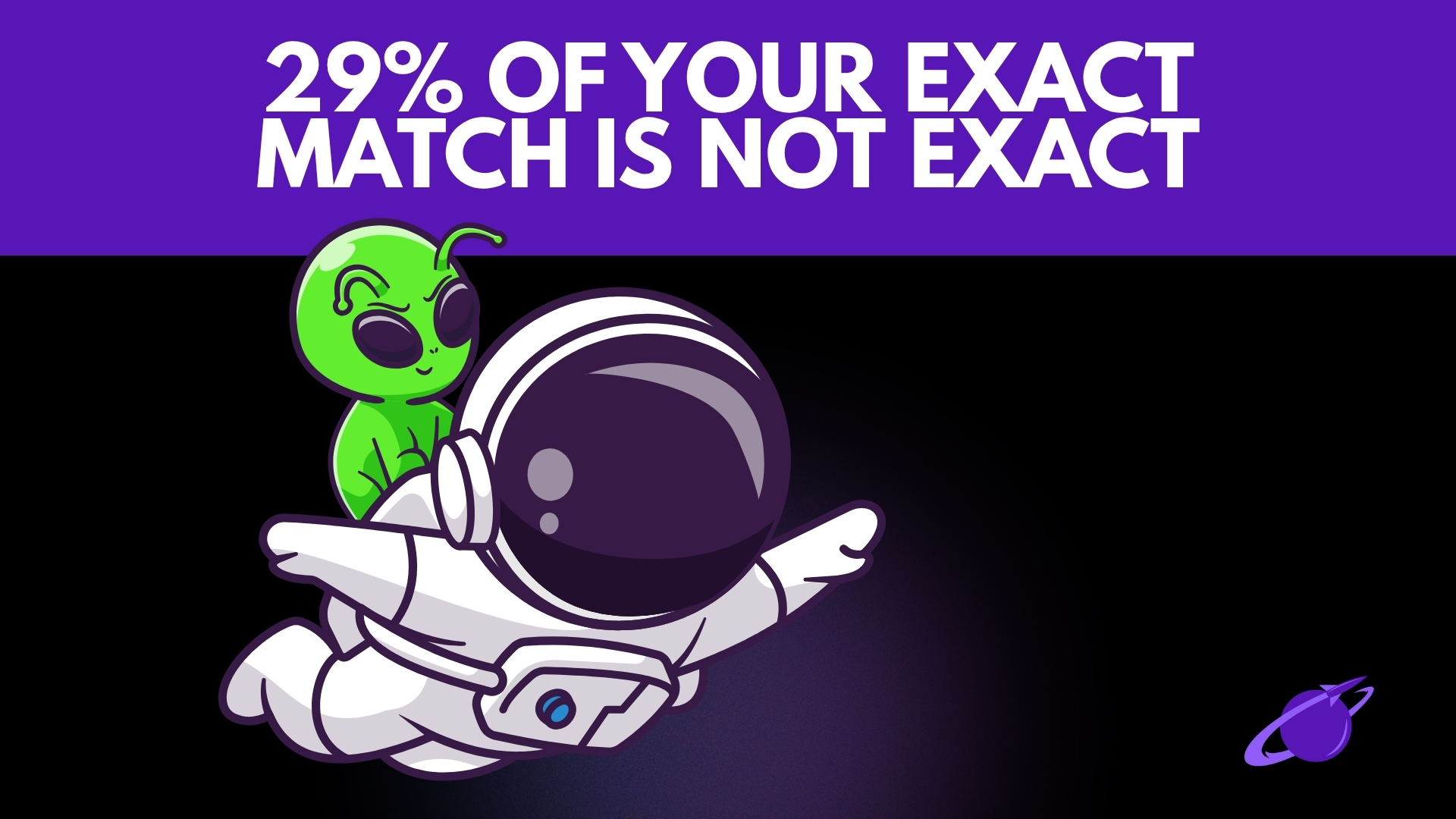
Roughly 71%. That is the share of exact match impressions that were genuinely exact by July 2026, according to an analysis of 383 million impressions published by Mike Ryan, Head of Ecommerce Insights at Smarter Ecommerce. The other 29% came from AI Max expansion running underneath keywords advertisers believed were restricted to one query.
Ryan called AI Max search term matching basically broad match. Before you rebuild your account around that number, note the limits. The dataset covers ecommerce campaigns across Europe, the Middle East, and Africa that were already running AI Max, and no comparable legal study exists. Treat it as directional evidence of where Google is heading, not a measurement of your injury account.
What an Analysis of 383 Million Impressions Found About Exact Match Expansion
Expansion inside exact match sat at zero in early 2025. By July 2026, it accounted for nearly three in ten impressions credited to exact match keywords. The climb happened while the keyword itself never changed and while the advertiser made no new setting choices.
Ryan flagged the reporting consequence too. When 29% of impressions credited to an exact match keyword were not exact, year-over-year comparisons stop comparing the same thing. Two different products end up stacked in one row.
Why Two-Thirds of the Expansion Happened in Four Months
Expansion did not build evenly. Roughly two-thirds of the total measured across the whole period arrived in the final four months, which matches Google pushing AI Max adoption ahead of the September migration. For a law firm, the lesson is about baselines. If your account had AI Max switched on and you compared this July to last July, you compared a keyword against a keyword plus automated expansion.
What the Study Does Not Cover for Legal Advertisers
Ecommerce queries and injury queries behave differently. A shopper searching a product name has a narrow intent range. A crash victim searching for help has an enormous one, spanning medical questions, insurance disputes, and criminal charges against the other driver. Expansion in a legal account can reach case types your firm does not handle, which costs a firm far more than a shopper reaching the wrong product size.
Why a $9.87 Legal Click Makes Match Type Expansion Expensive for Injury Firms
Legal advertising carries the highest cost per click and the highest cost per lead of any industry in the 2026 WordStream by LocaliQ benchmark study reported through Search Engine Journal. That is $9.87 a click against a $5.42 cross-industry average, and $131.63 a lead against $66.69. Your firm pays roughly double the cross-industry price for every click, so an off-target click costs twice what it would cost a plumber.
Now apply expansion to that math. Off-target impressions never announce themselves, and they arrive underneath keywords nobody thought to audit. The waste usually runs for months before anyone finds it.
How Expanded Matches Raise the Cost of Every Signed Case
Cost per signed case decides whether a campaign works, and expansion damages it in a way most reports hide. The damage surfaces as a slow rise in cost per lead while lead volume still looks healthy, because the intake team is answering calls that never had a case behind them. Nothing spikes, so nothing triggers a review.
What a Single Wasted Click Costs at Legal Advertising Rates
One click at $9.87 sounds trivial. Ten a day is $98.70. Across a 30-day month, that is $2,961 spent on people who were never going to call your firm. At the legal average cost per lead of $131.63, that is roughly twenty-two leads of budget pointed at the wrong searches. Small amounts compound quickly at legal rates, which is exactly why keyword-level control matters so much to injury advertisers and why losing it quietly is worse than losing it loudly.
Which Search Term Rows Still Separate Real Exact Match From AI Expansion
Google gives you one diagnostic that still works. The search terms report carries a source column showing which traffic came from automated expansion and not from your keyword. The reporting section further down this page covers the rest of the columns worth adding.
Most injury accounts have never switched the source column on. Switch it on this week, filter for AI Max, and compare those rows against the case types your firm actually signs. Twenty minutes with that comparison is worth more than a month of impression share reports. Firms managed by Legal Leads Group run the comparison as standard practice because match type strategy stopped being a setup decision and became a monthly one.
What the September 2026 AI Max Migration Does to Injury Law Firm Search Campaigns
Now for the change nobody asked for. Google stopped accepting new campaign-level broad match settings and legacy automatically created assets on August 3, 2026. Between September 1 and September 30, it migrated every existing campaign using those settings into AI Max. Automatically.
There is no opt-out. Google says campaigns get migrated in place using equivalent AI Max settings to minimize disruption, with existing brand inclusions and exclusions carrying over automatically. The equivalent is the word doing the work in that sentence. Equivalent settings can behave differently from the ones you picked.
Google’s own advice was to move first. Do not wait for the automatic upgrades, the company wrote, because switching early means you choose your settings instead of inheriting them. That matters more to a law firm than to most advertisers, since an injury account has case types it must never reach.
September is not the last deadline. January 15, 2027, brings reminder notifications for legacy Dynamic Search Ads. February 1 through February 28, 2027, migrates them automatically and permanently removes the ability to create new DSA ad groups. Older Google Ads API versions supporting the legacy features will be sunset in September 2027. These dates come on top of the other 2026 Google Ads updates affecting law firm marketing campaigns that your account has already absorbed this year.
Which Campaigns Google Moved Automatically Between September 1 and September 30
Three legacy configurations were on the list. Campaign-level broad match settings, automatically created assets, and Dynamic Search Ads, with DSAs given until February 2027. If your firm ran either of the first two, the migration already happened.
Check your change history for September and confirm which AI Max features were switched on. Google enables search term matching by default on migrated broad match campaigns, and that feature reads queries the way broad match did, then goes further.
Why Campaign-Level Broad Match Settings Went First
Campaign-level broad match was the closest existing feature to what AI Max does, so the swap required the least behavioral change. That was convenient for Google and risky for a law firm, because broad match and AI Max do not behave the same way. Broad match matched queries to your keywords. According to Google’s AI Max documentation, AI Max search term matching adds keywordless technology that finds queries from your landing pages and assets, with no keyword involved at all.
What Happens to Automatically Created Assets in an Attorney Account
Automatically created assets generated headlines and descriptions from your site. AI Max text customization goes further, pulling from your existing ads, landing page copy, and assets, then using generative AI to write copy matched to the specific search. Google’s own number for the whole feature set is 14% more conversions at a similar cost per acquisition, from Google internal data for non-retail advertisers in 2025, with no independent study behind it.
More conversions are not automatically better for an injury firm. Whether they help depends entirely on what the generated copy promised in order to produce them.
Why Generated Headlines Create State Bar Compliance Risk
Every state bar has rules about attorney advertising, and most prohibit claims that create unjustified expectations about results. A generative system writing headlines from your landing page copy can compress a careful sentence about past outcomes into a short promise about future ones. Consider a firm whose site says it recovered compensation for hundreds of crash victims across two decades. A generated headline could shorten that into a guarantee nobody at the firm wrote or approved.
Which Text Guidelines an Injury Firm Should Set Before Google Writes Copy
AI Max includes text guidelines, which let advertisers set rules that the generated copy must follow. Use them. Specify the firm name spelling, ban outcome language, ban any reference to fees the firm does not actually offer, and require that the practice area stays accurate. Put those rules in place before the migration finishes, rather than after a bar complaint arrives.
Why the Firm Name Belongs in Every Pinned Headline
Pinning the firm name to headline position one costs a little testing flexibility and guarantees your name appears in every version Google serves. Generated headlines rotate, and a rotation that drops your name spends your budget on a version nobody will remember. Your name should stay fixed while Google rotates everything around it.
Why February 2027 Ends Dynamic Search Ads for Law Firm Campaigns
Dynamic Search Ads were the tool for firms with large content libraries. A personal injury site with sixty practice pages could let Google match queries to the right page without building sixty ad groups. Google now calls AI Max the next generation of that product and is retiring the original.
Since September 2026, advertisers can no longer create new DSA campaigns through the Google Ads interface, Editor, or API. Existing campaigns keep running until the February 2027 migration. Dynamic ad groups convert to standard ad groups with the settings ported into AI Max.
What to Audit Before the DSA Sunset Reaches Your Account
Pull every page URL your DSA campaigns currently target and ask one question about each. Would you want an ad pointing here for a query you have not seen yet? Blog posts about legal news, attorney bios, and general FAQ pages often fail that test. Exclude them while exclusion is still a deliberate act rather than a cleanup after an automated migration.
Which Legacy Controls Carry Over and Which Quietly Do Not
Brand inclusions and exclusions carry over. Legacy URL controls are preserved. Everything else deserves verification rather than trust, since Google promised equivalence and not preservation.
Check final URL expansion before anything else in this list. Whenever the system predicts better performance, it sends traffic to other URLs on your site, limited to pages Google considers query-relevant and themed to your ad group. On a multi-practice injury site, that theme can include practice areas you never meant to pair. A rear-end collision searcher can be sent to a dog bite page, and you still pay legal rates for that click.
Which AI Ad Formats Personal Injury Attorneys Still Cannot Buy With Exact Match
Getting an exact match into AI Mode does not get your firm into the AI Mode formats Google promoted at Marketing Live. The experiment covers text ads. Nothing else.
Google announced a set of Gemini-powered ad experiences at Google Marketing Live on May 20, 2026, and every one of them requires an automated campaign type. Your firm can now reach AI Mode with a controlled keyword and still be invisible in the placements that look native to an AI answer.
Reach and format access cost the same thing. Both are paid for with targeting authority, and the more your firm gives up, the more it gets.
How Highlighted Answers Differ From a Standard Injury Text Ad
A text ad sits below or beside the AI response, labeled and separated. A Highlighted Answer sits inside the recommendation list the AI generates. Google’s framing was that when people are researching, they want helpful suggestions. The ad becomes one of the suggestions.
The difference for an injury firm is enormous. A crash victim reading an AI explanation of comparative fault, who reaches a list of recommended next steps, sees a firm named inside that list rather than in an ad block below. She reads it as a recommendation rather than an ad, and exact match cannot buy that. Our page on AI placements for personal injury lawyers covers the organic half of that same result.
Why Only AI Max and Performance Max Reach That Placement
Google has been consistent about the reason. Those products are designed to capture complex conversational intent, which is what a paragraph-length question is. A literal keyword cannot signal enough about a conversation for Google to place an ad inside a generated recommendation list. You give up query-level control to get format access.
What Conversational Discovery Does With a Question From a Crash Victim
Conversational Discovery ads answer a specific question with creative built for that question. Gemini reads the intent behind the query and generates the ad copy in the moment. Google’s example at Marketing Live involved home fragrance. Translate it to injury law, and the stakes change.
A user asks how long she has to file after a crash in her state. Gemini reads a deadline question and can generate creative built around timing. Your firm supplies the raw material, and the system decides which part of it answers this particular person.
Why Gemini Writes the Creative Instead of Your Firm
Static ad copy cannot answer a question it has never seen. Google’s position is that generated creative fits conversational search better than a fixed headline written months earlier. The company also reported that 75% of people say they make faster, more confident decisions using AI Mode, which is Google’s argument for why advertisers should be present inside that experience at all.
What That Means for Attorney Advertising Disclaimers
Disclaimers do not generate themselves. If your state bar requires specific language about prior results or advertising status, that language has to live somewhere the system will carry forward. Landing pages, site-wide footers, and pinned assets are reliable places. A generated headline is not.
Which Claims Should Never Enter an Asset Library
Anything about outcomes, recovery amounts, success rates, or speed of settlement should stay out of any asset the system can recombine. If a number exists in your asset library, assume it can appear next to a sentence you did not write. Keep verified case results on pages your firm controls, with full context around them.
What the Business Agent for Leads Replaces on an Injury Intake Form
The Business Agent for Leads is a Gemini-powered chat that sits inside the ad and replaces a static lead form. It is in open beta for United States advertisers and, like the other formats here, runs on Google’s automated campaign types rather than keyword campaigns. Instead of a name, phone number, and case description in three boxes, it holds a conversation and turns that into a lead.
For injury firms, the interesting part is what the transcript contains. A form gives you a name and a checkbox. A conversation gives you the crash date, whether the person has seen a doctor, whether an adjuster has called, and how the person describes fault. Your intake team collects that same information in the opening minutes of every call. A firm that stays on keyword campaigns keeps paying staff time for what the automated formats now gather before the phone rings.
Why Personal Injury Attorneys Cannot See AI Mode Performance in Google Ads Reporting
So how do you check whether any of this is working? You largely cannot. Google Ads offers no reporting line for AI Mode at all. Not a segment, not a filter, not a column.
Search Engine Land and PPC Land both flagged the same gap in their September coverage. Without a reporting split, nobody can tell whether AI Mode eligibility produced incremental reach or simply reallocated impressions your account was already winning elsewhere.
AI Max reporting is far more developed, which makes the missing AI Mode reporting harder to excuse.
Which Columns AI Max Added to the Keywords Report
Google’s AI Max reporting documentation covers several additions worth turning on. The search terms report includes a match type column showing how closely search terms relate to your keywords, plus the source column. A dropdown gives you search terms and landing pages from AI Max together, showing which queries triggered which ads. Asset reports mark customized text as Google AI in the added by column.
The keywords report also carries two aggregate rows worth checking weekly.
How to Read the Total AI Max Expanded Matches Row
This row totals the traffic AI Max matched to your broad match keywords. It answers a specific question. How much of this campaign’s volume came from queries the system judged close enough to your keywords? A large number here on an injury campaign means the system is reaching well past your list, and the search terms report will tell you where.
How to Read the Total AI Max Landing Page Matches Row
Everything here arrived without a keyword. The row totals traffic matched to your landing pages and assets alone. On a multi-practice injury site, this is the row most likely to surface case types your firm refers out rather than signs, so read it closely even when the volume looks small.
Why No Segment Separates AI Mode Delivery From Standard Search Delivery
Every other meaningful placement in Google Ads has a reporting boundary. Search partners, Display, YouTube, Maps. AI Mode does not, which means the impressions blend into your Search totals with no marker.
A campaign whose impressions rose 18% this month might have gained AI Mode reach, or might have won more standard auctions, or might have benefited from a competitor pausing. Three different causes, one indistinguishable number.
Why Impression Growth Alone Proves Nothing Right Now
Impressions have never been a useful metric for legal advertisers, and they are worse now. Never read impression growth without checking cost per signed case in the same view, especially while Google is quietly expanding where those impressions can appear.
How to Set a Baseline Before Google Changes Something Else
Record your current numbers today and date the record. Cost per lead, cost per signed case, lead-to-signed rate, and total search spend, all captured before the next experiment expands. When Google changes something again without telling you, and it will, a dated baseline is the only way to prove what moved.
What Injury Firms Should Measure While the Segment Is Missing
Stop trying to measure this by placement, and track the things that still tell you something real. Four numbers matter most.
- Signed cases per month against total search spend
- Cost per signed case at the campaign level rather than the keyword level
- Search term reports filtered to AI Max sources, reviewed weekly
- Intake notes recording how each caller describes finding the firm
None of those require a reporting segment Google has not built, and all four survive whatever the next experiment changes. Your case management system also knows things Google Ads never will, including which leads had real injuries, which had coverage worth pursuing, and which signed. Line those records up against the numbers above every month, and you will see the trend before any Google column shows it to you.
How Intake Calls Reveal AI Mode Traffic Before Reporting Does
Your intake team will spot this before your reporting does. Callers arriving from AI Mode tend to sound different. They open with a specific question, not a general one. Some already understand how contingency fees work, which suggests that something explained the fee structure before they picked up the phone.
Train the team to note it. A caller who wants to know how your firm handles medical liens specifically, before she has described her crash, almost certainly researched somewhere before dialing, and AI Mode is now the most likely place. Log that. Enough of those notes will tell you what no Google Ads column currently will.
How Injury Law Firms Should Respond to the AI Updates for Personal Injury Google Ads Campaigns
A managing partner opens the Google Ads interface on a Monday, sees that lead volume rose 12% and cost per lead rose 9%, and cannot tell whether the account improved or slipped. Most injury firms now sit exactly there. The interface will not report the difference, so the answer comes from tightening the settings your firm still controls.
Negative keywords, brand controls, and conversion definitions survived every change described on this page. Each tells Google what you do not want or what counts as success, rather than what query to match. Google kept the controls that describe your business and loosened the ones that describe a query.
Which Account Controls Still Work Across Every AI Placement
Negative keywords apply across match types, across AI Max expansion, and across keywordless matching. They are the one set of instructions the system cannot reinterpret. Brand settings decide whether your ads appear on searches containing brand names. Conversion actions decide what the bidding system optimizes toward. Feeding signed case data back into that definition matters more than any bid adjustment you make this quarter.
Why Negative Keyword Lists Matter More Than They Did Two Years Ago
In 2024, a negative list mostly blocked job seekers, students, and people wanting free advice. In 2026, it is the boundary-keeping keywordless matching of case types your firm does not handle. An injury firm that never wrote a negative for workers’ compensation or medical malpractice used to be fine, because exact match kept those queries away naturally. Exact match no longer blocks them reliably, which is why Legal Leads Group rebuilds negative lists on every account audit.
Which Negatives Protect an Injury Budget From Adjacent Case Types
Start with the case types that share vocabulary with yours, and negative the qualifier rather than the shared root. Workers’ compensation queries share the word injury with yours, so the negatives are terms like hurt at work, workers’ comp, and on the job. Medical malpractice involves the doctor and the hospital, so the negatives are malpractice, misdiagnosis, and surgical error. Social Security disability shares no vocabulary worth protecting, so block disability benefits and SSDI outright. Add competitor firm names you have decided not to bid on, plus free, pro bono, and how to file myself.
How Brand Controls Inside AI Max Protect a Law Firm Name
Google rolled out a branded search setting inside AI Max on June 1, 2026, with three options. Show ads on all relevant searches, control branded searches with inclusions and exclusions, or show ads only on unbranded searches. The interface asks you to choose how your ads show on searches containing brand names.
The middle option is right for almost every injury firm. It lets you include your own firm name, exclude the competitors you chose not to target, and keep everything else running. It handles competitor exclusion more cleanly than a negative keyword list, because it works from Google’s own brand index rather than from spellings you remembered to add.
Why the Unbranded-Only Setting Is the Wrong Default for Attorneys
The unbranded-only setting blocks every brand Google recognizes, and Google itself describes it as highly restrictive. For a law firm, that includes your own name. A firm running television or billboards drives people to search that name, and unbranded-only turns off the cheapest, highest-converting traffic in the account. Use exclusions to block competitors instead, and keep your own brand terms live.
What an Injury Firm Should Change in the Account This Month
Open the search terms report, add the source column, and read two weeks of AI Max rows. Rebuild the negative list around adjacent case types instead of around junk terms. Move your brand controls off the default and onto the inclusions and exclusions option. Set text guidelines before the system writes anything under your firm name, and confirm your conversion action reflects signed cases, not form submissions.
None of that requires a bigger budget, only somebody willing to look. Our breakdown of whether AI search replaced the need for personal injury Google Ads covers the other half of this question, and the two are connected now in a way they were not last year.
Talk to Legal Leads Group About the AI Updates for Personal Injury Google Ads Campaigns
Reading a LinkedIn comment from Google’s Ads Liaison is not how a managing partner should find out that her keyword strategy changed. Somebody has to watch for it anyway, because these changes arrive without notice and will keep arriving that way. Legal Leads Group manages Google Ads for injury firms nationwide, and we track those changes the week they happen rather than the quarter after they cost you money.
We watch the release notes and the liaison threads, then translate each change into what it does inside your specific account. We rebuild the negative lists and text guidelines each change affects, document what moved and when, and report against cost per signed case so you can see whether any of it worked.
The AI updates for personal injury Google Ads campaigns created the same two-way problem for every injury firm on Google. Reach expanded, control shrank, and Google has not built the report that would separate those two effects inside your account. The firms that come through this well are the ones tightening what they still control while their competitors wait for a number that is never going to arrive. If you want a free review of what the September migration did to your account, reach us through our contact page or call (805) 273-8791, and we will pull the numbers with you.