Google Ads for Personal Injury Attorneys Has Become Conversational
If you’re an injury lawyer running Google Ads or any campaigns on any paid ad platform, read today’s blog post. According to Search Engine Land, Google’s latest AI ad update shows a paradigm shift is occurring between clicks and conversations.
A person searching after a car accident usually does not type a clean keyword like “personal injury lawyer” anymore. They may ask whether they need a lawyer after a rear-end crash, who pays medical bills after a collision, or what to do if an insurance adjuster keeps calling. Those longer searches reveal fear, urgency, confusion, and buying intent. A strong Google Ads campaign should respond to that language instead of forcing every injured person into the same generic ad funnel.
Legal Leads Group helps personal injury attorneys build paid search campaigns around the cases that actually matter. That means tracking more than clicks and form fills. It means connecting search intent, ad copy, landing page content, intake performance, and signed case outcomes into one clear marketing system. If you are a personal injury lawyer who wants better Google Ads leads, call Legal Leads Group at (805) 273-8791 to speak with our team today.
How Conversational Marketing Will Change Google Ads for Personal Injury Attorneys
Conversational marketing is changing how personal injury law firms should think about Google Ads. The old model focused heavily on getting the click, sending the user to a page, and hoping the person called before comparing three other firms. That model still has value, but it misses how injured people search when they need answers fast.
A car accident victim may search in fragments at first. Then the search becomes more specific. They may ask about medical bills, missed work, insurance delays, fault disputes, or whether a lawyer can help before they agree to a recorded statement. Google Ads for personal injury attorneys now needs to meet that searcher inside the question, not after the question has already passed.
Why Personal Injury Google Ads Are Moving Beyond Simple Clicks
Personal injury searches rarely happen in a neat, predictable order. Someone may start with “car accident lawyer near me” and later search “what if the insurance company says I caused the crash.” Another person may skip the broad search entirely and ask a longer question because they already know they need help. That is where conversational marketing starts to matter.
A click only tells you that someone touched the ad. It does not tell you whether they had a valid injury claim, whether they spoke with intake, whether they booked a consultation, or whether they signed. Personal injury firms that only measure clicks can mistake activity for growth. That creates expensive confusion, especially in competitive markets where accident keywords can burn through budget quickly.
How Voice Search and Natural Language Patterns Shape Client Queries
Step into the shoes of a premium personal injury prospect to instantly realize why traditional keyword targeting fails so miserably. An injured commuter standing on the side of a highway does not type short, clinical phrases into a search bar; they speak directly into their mobile devices with intense urgency. They talk to their smartphones exactly like they would speak to a trusted family member or a close friend. This explosive change in consumer behavior has unleashed an unprecedented wave of detailed, multi-word questions that completely bypass traditional ad setups.
- Traditional typed text queries look like cold fragments, such as car crash lawyer or injury attorney
- Modern mobile voice searches present as natural human statements, such as I was hit by a truck on the highway and need help with my hospital bills
Legal Leads Group captures this massive wave of vocal traffic by engineering responsive ad structures that recognize organic human speech patterns. We understand that matching real-world verbal queries is the absolute secret to unlocking massive campaign growth. When your paid campaign mirrors the exact conversational language of a person in distress, your visibility skyrockets. This calculated shift to vocal search optimization ensures your firm intercepts the absolute best leads before anyone else even knows they exist.
How Injury Victims Search When They Need Legal Help
Injured people often search in the same language they would use when talking to a friend or family member. They do not always search as marketers expect. They ask practical questions because they want to know what happens next.
A search like “do I need a lawyer after a rear-end accident” carries more context than a broad keyword like “injury attorney.” It tells the law firm that the searcher may have been in a crash, may feel unsure about fault, and may need reassurance before calling. Google Ads campaigns that account for this language can build ads and landing pages that feel more relevant to the person behind the query.
Medical Bills Create Urgent Search Behavior
Medical bills push many accident victims to search quickly. A person may worry about ambulance charges, emergency room costs, follow-up care, physical therapy, or missed paychecks. Those concerns often appear in longer search queries before the person calls a lawyer.
A personal injury ad that speaks only in broad legal terms may miss that urgency. A stronger campaign can connect the ad message to the real pressure the person feels. If the searcher wants to know who pays medical bills after a crash, the ad and landing page should address that concern clearly.
Insurance Pressure Changes Search Intent
Insurance pressure can turn a casual search into a high-intent search. An adjuster may call soon after the crash, request a recorded statement, question the injury, or offer a fast settlement. That pressure often sends injured people back to Google with more specific questions.
A campaign should recognize the difference between a person researching general injury law and a person trying to decide whether to speak with an adjuster. Those searches may need different ad copy, different landing page content, and different intake handling. The closer the campaign gets to the searcher’s actual concern, the stronger the chance of a qualified lead.
Why Click Volume Can Hide Bad Campaign Performance
High click volume can make a campaign look busy while the firm receives weak leads. A personal injury campaign may get traffic from people looking for jobs, legal definitions, minor property damage help, or general insurance information. Those clicks can drain the budget without producing signed cases.
Personal injury attorneys need to measure what happens after the click. Did the person call? Did intake answer? Did the lead match the firm’s case criteria? Did the consultation turn into a signed retainer? Without those answers, the ad account may keep spending money on searches that never become cases.
The Wrong Conversion Goal Can Train Google Ads Poorly
Google Ads learns from the conversion actions inside the account. If the account treats every form fill, accidental call, or weak chat lead as a successful conversion, the system may look for more of the same. That creates a dangerous feedback loop.
A personal injury firm should not train Google Ads to chase noise. It should train the campaign around real business outcomes whenever possible. Signed cases, qualified consultations, and high-value case types give the system better direction than raw lead counts alone.
Intake Data Gives Campaigns Better Direction
Intake data helps personal injury campaigns separate real opportunities from surface-level interest. The ad account may know which keyword brought in a lead, but the intake team knows whether that lead had injuries, liability facts, insurance coverage, and a real need for legal help. That information should influence campaign decisions.
Legal Leads Group looks at paid search with this full path in mind. The campaign should not end with a click. It should connect the keyword, ad, landing page, call, intake notes, and signed case outcome so the firm can see what is actually working.
How AI-Powered Search Ads Can Qualify Injury Leads Before the First Call
AI-powered search ads are pushing paid search closer to a conversation. Instead of relying only on a static ad and a landing page, newer ad experiences can help answer questions, surface business details, and guide the user before the first call. For personal injury attorneys, that can be powerful when the campaign gives Google clear, accurate, and useful information.
This shift also raises the stakes. If Google uses campaign assets, website content, and business information to help answer searcher questions, weak messaging can become a real problem. A personal injury law firm needs clear service pages, strong landing pages, accurate case type language, and a campaign structure that tells Google what kind of leads the firm actually wants.
What AI-Assisted Lead Qualification Could Mean for Injury Firms
AI-assisted lead qualification may help searchers understand whether a firm handles their type of case before they call. A person injured in a rideshare crash, truck collision, slip and fall, or motorcycle accident may ask specific questions before contacting a lawyer. If the ad experience can respond with relevant information, the firm may receive a better prepared lead.
That does not mean personal injury firms should hand over the entire intake process to automation. Legal intake still requires judgment, empathy, and careful screening. The goal is not to replace intake. The goal is to reduce wasted calls and help serious injury prospects take the next step faster.
Better Questions Can Lead to Better Calls
When searchers get answers before calling, the first conversation can become more focused. The person may already understand that the firm handles car accident claims, offers consultations, or helps with insurance problems after a crash. Intake can spend less time on basic education and more time identifying case facts.
That can help the firm move faster when the lead is strong. Speed matters in personal injury marketing because injury victims often contact more than one firm. A clearer ad experience can help the right person reach the right team before the lead goes cold.
Poor Information Can Create Poor Leads
AI-assisted ad experiences can only work well when the underlying information is strong. If the landing page is vague, the ad copy sounds generic, or the firm’s campaign structure mixes too many case types, the system may struggle to identify the best match. That can lead to broad, low-quality traffic.
Personal injury attorneys should treat their website and landing pages as campaign assets, not afterthoughts. The content should clearly explain the case types the firm wants, the problems clients face, and the next step a qualified lead should take. Strong content gives both searchers and ad systems better signals.
Why Personal Injury Attorneys Still Need Control Over the Conversation
Automation can help campaigns move faster, but personal injury law firms still need control over message, targeting, and lead quality. Google may help match ads to searches, but the firm decides which cases matter. A law firm that wants serious injury cases should not let automation chase every low-value accident inquiry.
Control comes from a clear campaign structure, strong conversion tracking, and regular review. The firm should know which campaigns bring signed retainers, which ones bring weak leads, and which ones need tighter targeting. Personal injury, Google Ads works best when automation has direction.
Case Type Segmentation Keeps Campaigns Cleaner
Case type segmentation helps the campaign focus. Car accident leads, truck accident leads, motorcycle accident leads, slip and fall leads, and catastrophic injury leads do not all carry the same value or intent. Each category may need different keywords, ad copy, landing pages, and bidding goals.
When everything sits inside one broad campaign, the data can get messy fast. A high-volume keyword may hide the fact that lower-volume case types produce better signed cases. Segmentation gives the firm a clearer view of what drives revenue.
Signed Case Tracking Protects the Budget
Signed case tracking helps protect the firm from chasing vanity metrics. A campaign with a low cost per lead may still perform poorly if those leads never sign. A campaign with fewer leads may perform better if those leads produce serious cases.
Personal injury attorneys need to evaluate Google Ads with the same seriousness they apply to intake and case selection. The question is not only how many leads came in. The better question is how many qualified prospects became signed cases and whether those cases matched the firm’s growth goals.
What Conversational Search Means for Personal Injury Law Firm Marketing
Conversational search forces personal injury law firms to become clearer. The ads must answer real questions. The landing pages must match the intent behind those questions. The intake team must understand what the searcher was likely worried about before they called.
This is where Google Ads for Personal Injury Attorneys becomes more than paid traffic. It becomes a complete marketing path. The search begins with a question, the ad earns attention, the page builds confidence, the call starts a conversation, and the intake team turns that moment into a real opportunity.
How Personal Injury Firms Can Build Campaigns Around Real Search Language
Real search language comes from real client concerns. Personal injury lawyers should pay attention to the words people use during intake calls, consultations, and chat conversations. Those words often reveal better ad angles than a keyword tool alone.
If callers keep asking whether they can get medical treatment without upfront payment, that concern may deserve ad and landing page support. If callers worry that the insurance company blames them, the campaign should address fault disputes. Personal injury marketing gets sharper when it reflects the language injured people already use.
Intake Calls Can Reveal Strong Keyword Themes
Intake calls can show patterns that keyword reports miss. Callers may repeat the same concerns about pain, fault, vehicle damage, medical care, lost wages, or insurance delays. Those patterns can help shape campaign themes.
A firm that listens to intake data can build stronger ads. The campaign can speak to the searcher’s actual problem instead of relying on broad phrases that every competitor uses. That difference matters when multiple firms bid on the same search.
Landing Page Copy Should Continue the Conversation
The landing page should not feel disconnected from the ad. If the ad speaks to car accident victims worried about medical bills, the page should address that issue quickly. If the ad targets truck accident cases, the page should explain why commercial vehicle claims require fast evidence preservation.
A strong landing page keeps the conversation moving. It answers the concern that brought the person to the page and gives them a simple next step. For personal injury law firms, that next step should feel clear, fast, and low-pressure.
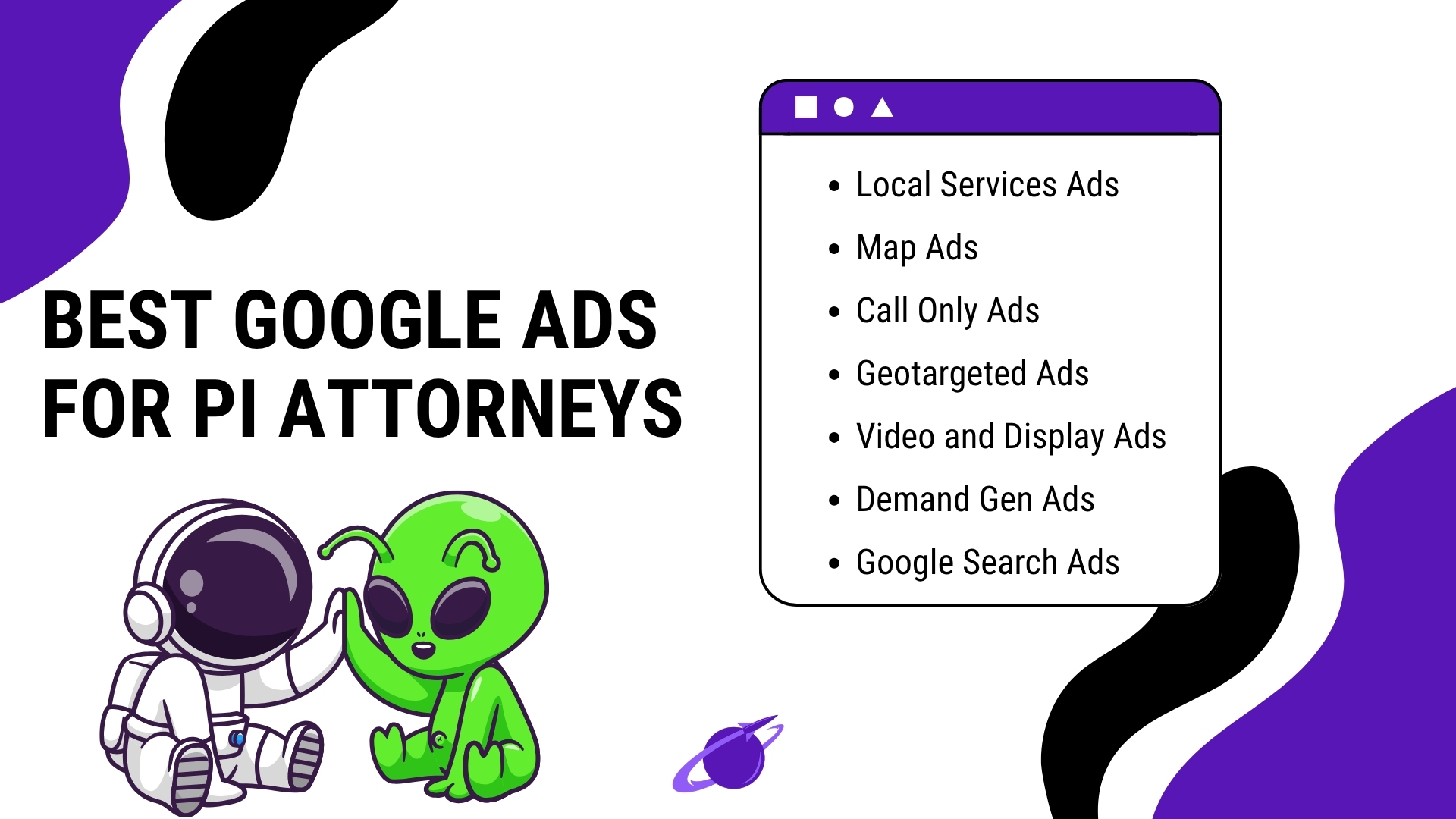
Top Performing Personal Injury Attorney Google Ad Campaigns
Personal injury attorneys have more paid ad options than ever, but not every campaign type deserves the same budget, attention, or trust. Some campaigns create visibility. Some keep the firm in front of people who have already searched once. A few can drive urgent calls from injured people who need legal help right now.
The strongest strategy usually does not rely on one ad type alone. A personal injury law firm needs a paid marketing system that can catch high-intent searches, support local visibility, follow up with prospects who did not call the first time, and feed the ad account better conversion data. When each campaign type has a clear job, Google Ads for Personal Injury Attorneys becomes much easier to measure and much harder for weak leads to hide inside.
Local Services Ads
Local Services Ads can help personal injury attorneys appear near the top of Google when someone searches for legal help in a specific area. These ads often show with trust signals, firm information, and a call-focused layout that makes them useful for people who want fast contact. For injury victims searching on a phone, that format can remove friction quickly.
Local Services Ads can work well for personal injury firms because many accident victims search with immediate local intent. They may not want to compare twenty websites. They want to know which law firm handles their accident type, serves their area, and can answer the phone now.
Map Ads
Map Ads help personal injury law firms appear when searchers use Google Maps or local results to find nearby legal services. This can matter when an injured person wants a firm close to home, close to a hospital, or close enough to feel accessible. Local visibility can shape trust before the person ever reads a full page.
For personal injury attorneys, Map Ads work best when the firm has a strong Google Business Profile, accurate office information, clear service categories, and a review profile that supports trust. The ad can create visibility, but the local profile often carries the credibility load.
Call Only Ads
Call-only ads are built for one purpose. They push the searcher to call. For personal injury attorneys, that can be powerful because many strong leads come from people who want immediate help after an accident.
These ads work best when the searcher has urgent intent, and the firm can answer quickly. If the firm cannot handle calls well, Call Only Ads can become expensive fast. The ad may do its job perfectly, but the firm still loses the lead during intake.
Geotargeted Ads
Geotargeted Ads allow personal injury attorneys to focus budget on the markets that matter most. This can include cities, counties, neighborhoods, ZIP codes, or radius-based targeting around areas that produce strong cases. For law firms with limited budgets, this type of control matters.
A personal injury firm should not assume every nearby market deserves equal spend. Some areas may produce more serious accidents, better case fit, or stronger signed case rates. Others may bring in traffic that looks active but rarely becomes revenue.
Video and Display Ads
Video and Display Ads help personal injury law firms stay visible before and after a search. These ads are not always the best direct response channel for urgent injury leads, but they can support brand awareness and retargeting. They remind potential clients that the firm exists when the person is still deciding who to call.
For personal injury attorneys, Video and Display Ads should have a defined purpose. They should not be treated like search ads. A person watching a video or seeing a display ad may not be ready to call immediately, but they may remember the firm when the legal need becomes more urgent.
Demand Gen Ads
Demand Gen Ads can help personal injury law firms reach people across visual Google placements, including YouTube, Discover, and Gmail. These ads can support awareness and retargeting, especially for firms that want to build a broader paid media presence. They work best when the firm understands that this traffic may not carry the same urgency as search traffic.
For personal injury attorneys, Demand Gen Ads should support the larger marketing system. They can help educate, remind, and reengage. They should not replace the campaigns that capture immediate search intent.
And the Best Paid Ad Campaign for Personal Injury Lawyers Is Google Search Ads
Google Search Ads remain the strongest paid ad campaign for most personal injury lawyers because they capture active intent. When someone searches for a car accident lawyer, truck accident attorney, or personal injury law firm after an injury, the legal need already exists. Search Ads allow the firm to show up at that exact moment.
That timing is the whole engine. Search Ads do not need to convince someone that injury law exists. They need to convince the right injured person that this firm can help with the next step. That makes search one of the most powerful channels for personal injury lead generation when the campaign has a strong structure and tracking.
Additional Paid Ad Campaigns for Personal Injury Attorneys to Consider
Google Search Ads may carry the hottest intent, but personal injury attorneys should not ignore the paid channels around search. An injured person may not call the first time they see your firm. They may search after a crash, visit your website, leave without taking action, see your firm again on social media, watch a short video, and then return through a branded search days later.
That is why paid media for personal injury law firms works best when each campaign has a clear purpose. Search Ads capture urgent demand. Other paid channels create visibility, keep your firm in front of accident victims, and help move hesitant prospects closer to calling. The trick is knowing which platforms deserve budget, which ones need strict tracking, and which ones should support Google Ads instead of replacing it.
Meta Ads for Accident Injury Attorneys
Meta Ads can help accident injury attorneys stay visible on Facebook and Instagram, especially when prospects are not actively searching on Google at that moment. These campaigns can work well for retargeting people who have already visited your website, engaged with your content, or shown interest in accident-related topics. They can also support broader brand awareness in local markets where personal injury competition is heavy.
Meta traffic usually behaves differently from Google Search traffic. Someone clicking a Facebook ad may not have the same immediate intent as someone searching “car accident lawyer near me.” That does not make Meta useless. It means the campaign needs the right expectations, the right message, and the right follow-up system.
MVA Leads From Instagram Ads
Instagram Ads can help personal injury attorneys reach motor vehicle accident prospects with fast, visual messaging. Many people spend time on Instagram every day, and that gives law firms another way to stay visible after an accident. The platform can work for retargeting, short video education, and local awareness campaigns tied to car, truck, motorcycle, rideshare, and pedestrian accident cases.
Instagram works best when the message feels immediate and easy to understand. A polished brand ad may look nice, but a practical accident-focused message can do more work. The goal is to stop the scroll long enough to make the prospect think, “This applies to me.”
Bing and Yahoo Pay-Per-Click Ads
Bing and Yahoo Pay Per Click Ads can give personal injury attorneys another way to reach searchers outside Google. These platforms may not match Google’s search volume, but they can sometimes deliver lower-cost clicks and less competition in certain legal markets. For firms spending heavily on Google, that extra search inventory can be worth testing.
The mistake is treating Bing and Yahoo like a magic budget fix. Lower click costs do not automatically mean better cases. Personal injury law firms still need strong campaign structure, negative keywords, location targeting, call tracking, and signed case reporting.
OTT Ads for Injury Lawyers
OTT Ads allow personal injury lawyers to reach people through streaming platforms and connected TV devices. These ads can help firms build awareness in a local market and stay visible to people who may need legal help after an accident. OTT is not usually the first place a personal injury firm should spend if it needs immediate signed cases, but it can support a larger growth strategy.
The strength of OTT is visual presence. A law firm can appear in a living room, on a mobile device, or through streaming content without relying only on search results. That can help the firm build recognition in competitive markets where people may not call the first firm they see.
How Retargeting Ads Keep Personal Injury Law Firms Visible After the First Search
Retargeting Ads help personal injury law firms stay in front of people who already showed interest. That includes website visitors, landing page visitors, video viewers, and people who engaged with previous ads. Retargeting can be one of the most useful support campaigns because it focuses on warmer prospects instead of starting cold.
Personal injury prospects often need more than one interaction before they call. They may compare firms, talk to family, wait for a medical diagnosis, or hope the insurance company treats them fairly. Retargeting keeps the firm visible while that decision develops.
Why Retargeting Matters for Personal Injury Lead Generation
A missed first contact does not always mean the lead is gone. Many injury victims leave a website without calling because they feel unsure. Retargeting gives the firm another chance to address concerns and invite the person back.
Retargeting works best when it matches the original interest. A person who visited a car accident page should see car accident messaging. A person who visited a truck accident page should see truck accident messaging. This keeps the ad relevant and avoids the generic feeling that weakens many legal campaigns.
Personal Injury Retargeting Should Address Hesitation
People hesitate for real reasons. They may worry about legal fees, fear that their injuries are not serious enough, or assume the insurance company will handle everything. Retargeting can speak to those concerns directly.
A clear retargeting message can explain that the firm can review the claim, answer questions, and help the person understand next steps. That makes the ad useful instead of repetitive. The prospect gets a reason to return.
Retargeting Should Exclude People Who Already Converted
A retargeting campaign should not keep chasing people who already called or submitted a form. That wastes budget and can create a poor user experience. The firm should exclude converted leads whenever tracking allows.
Clean exclusions help the campaign focus on people who still need a nudge. They also help reporting stay cleaner. The goal is not to follow everyone forever. The goal is to bring back serious prospects who have not taken the next step.
How LLG Connects Retargeting to Personal Injury Google Ads Performance
Legal Leads Group treats retargeting as part of the larger paid media path. The first search may create awareness. The landing page may educate. Retargeting may bring the prospect back. Intake may turn that return visit into a signed case.
That full path matters because personal injury marketing rarely happens in one perfect click. A serious lead may take several touches before contacting the firm. LLG helps personal injury attorneys see how those touches work together so the firm can make smarter budget decisions.
Retargeting Data Can Reveal Stronger Campaign Paths
Retargeting data can show which pages, case types, and messages pull people back toward contact. If car accident visitors return after seeing medical bill messaging, that tells the firm something useful. If truck accident visitors respond to evidence preservation messaging, that can shape future ads.
The campaign becomes stronger when every result teaches the firm something. Retargeting is not just a reminder tool. It can become a source of insight about what prospects need before they call.
Support Campaigns Should Still Be Measured by Case Outcomes
Support campaigns still need accountability. A campaign may assist the path to a signed case even if it did not create the first click or final click. That value deserves attention, but it should still connect back to real outcomes.
Personal injury attorneys should ask whether retargeting helps produce qualified consultations, signed retainers, and stronger case type performance. If it does, it belongs in the system. If it does not, the strategy needs a sharper message, cleaner audience, or lower budget.
Quick Tips for Personal Injury Attorneys Looking to Run a Google Ads Campaign
Personal injury Google Ads can move fast, spend fast, and punish vague strategy fast. That is why a campaign needs structure before the first dollar goes live. A law firm should know which case types it wants, which searches matter, which locations deserve budget, and which conversions actually prove value.
A strong campaign does not chase every injury keyword in the market. It targets searches that can turn into real consultations and signed cases. Google Ads for Personal Injury Attorneys works best when the account acts less like a traffic machine and more like a case acquisition system.
Build Campaigns Around Case Type Instead of Generic Injury Keywords
Generic personal injury campaigns can create messy data. A broad campaign may pull in car accident searches, slip and fall questions, dog bite inquiries, medical malpractice confusion, job seekers, and people looking for free legal templates. That makes it harder to know which keywords produce the cases your firm actually wants.
Case-type campaigns give your law firm cleaner control. You can build separate campaigns for car accidents, truck accidents, motorcycle accidents, catastrophic injuries, and wrongful death claims. Each campaign can then use its own keywords, ad copy, landing page, budget, and conversion goals.
A strong personal injury campaign structure may include separate campaigns for the following case types.
- Car accident cases
- Truck accident cases
- Motorcycle accident cases
- Pedestrian accident cases
- Catastrophic injury cases
- Wrongful death cases
This separation makes reporting cleaner. It also helps the firm see which case types deserve more budget and which ones need tighter targeting.
Car Accident Google Ads for Personal Injury Attorneys
Car accident campaigns often deserve their own structure because motor vehicle accident searches can carry strong intent. A person searching after a crash may need help with medical bills, lost wages, vehicle damage, insurance calls, or pain that gets worse days later. The campaign should speak directly to those concerns.
A car accident campaign should not blend every injury search into one bucket. Rear-end collisions, rideshare crashes, hit-and-run accidents, uninsured driver crashes, and intersection collisions may all need different keyword groups. A better structure helps the firm see which searches produce signed MVA cases.
Car Accident Keywords Should Match Post-Crash Problems
Car accident keywords should reflect how injured people actually search after a collision. Many searchers do not begin with polished legal language. They ask what to do, whether they need a lawyer, who pays for treatment, or whether they should talk to the insurance company.
That language can shape stronger ads. A campaign targeting “lawyer for car accident medical bills” should not use the same message as a campaign targeting “car accident attorney near me.” One search shows financial pressure. The other shows local hiring intent. Both matter, but they need different handling.
MVA Landing Pages Should Speak to Immediate Legal Concerns
A car accident landing page should answer the questions that brought the searcher there. It should explain what to do after a crash, why medical documentation matters, how insurance companies may evaluate fault, and why early legal guidance can help. The page should not open with broad firm language that could apply to any practice area.
The landing page should also make the consultation step simple. If an injured person has to dig for a phone number or wonder whether the firm handles car accidents, the page has already made the lead work too hard. Personal injury marketing needs speed and clarity.
Truck Accident Google Ads for Serious Injury Cases
Truck accident campaigns need a sharper strategy because these cases often involve serious injuries, commercial insurance, employer liability, maintenance records, driver logs, and fast-moving evidence. A searcher who needs help after an 18-wheeler crash may not need the same message as someone in a minor fender bender. The campaign should reflect that difference.
Personal injury attorneys should not bury truck accident keywords inside a broad auto accident campaign if truck cases are a growth priority. Truck accident searches can have different costs, conversion rates, and case values. Separate tracking helps the firm understand whether the budget creates real opportunities.
Commercial Vehicle Searches Need Specific Ad Copy
Truck accident ad copy should speak to the complexity of commercial vehicle claims. The searcher may worry about a trucking company, a delivery driver, a company insurer, or a serious injury that requires long-term care. Broad copy about accident claims may feel too thin for that situation.
A stronger ad can mention truck crashes, commercial vehicle accidents, serious injuries, and fast case review. The message should make it clear that the firm understands the difference between a regular crash and a commercial vehicle claim. That clarity can help attract better leads.
Motorcycle Accident Google Ads for High-Intent Local Searches
Motorcycle accident campaigns should speak directly to riders and families dealing with serious injuries. These cases often involve drivers who claim they did not see the rider, disputes over fault, and injuries that require extensive treatment. A generic personal injury message can miss the emotional and practical weight of the search.
A strong motorcycle accident campaign should focus on local searches with real legal intent. Searches involving motorcycle crash lawyers, motorcycle injury attorneys, and accident fault disputes may show that the person needs more than basic information. Those searches deserve dedicated ads and landing pages.
Motorcycle Crash Ads Should Address Fault Disputes
Fault disputes can appear quickly after a motorcycle crash. Insurance companies may question speed, visibility, lane position, or rider conduct. A campaign that speaks to these disputes can feel more relevant to an injured rider than a broad accident ad.
The ad should not overpromise an outcome. It should explain that the firm can review the crash, evidence, injuries, and insurance issues. That message gives the searcher a concrete reason to call without sounding inflated.
Local Search Terms Can Help Capture Ready-to-Call Riders
Motorcycle accident searches often include city terms, near me language, or local injury lawyer phrases. Those searches can show strong intent because the person wants help in a specific market. Location targeting and local ad copy can help the campaign meet that intent.
The landing page should continue that local signal. It can mention the service area naturally, explain the firm’s motorcycle accident focus, and guide the injured rider toward a consultation. Local relevance should feel useful, not stuffed into every sentence.
Catastrophic Injury Google Ads for Higher Value Personal Injury Claims
Catastrophic injury campaigns should handle the most serious case types with care. These searches may involve traumatic brain injuries, spinal cord injuries, amputations, burn injuries, severe fractures, or wrongful death claims. The searcher may be a family member looking for answers during a frightening time.
The campaign should not sound loud or gimmicky. It should sound serious, clear, and steady. Personal injury attorneys seeking higher-value cases need ads and landing pages that respect the severity of the situation while giving the family a practical next step.
Serious Injury Keywords Need Careful Qualification
Serious injury keywords can produce valuable cases, but they can also attract research traffic. Someone may search for medical information, disability resources, or general treatment questions without looking for a lawyer. The campaign needs keyword controls and negative keywords to reduce waste.
Qualifications should continue through intake. The team should gather injury details, accident facts, treatment status, insurance information, and whether the prospect already has counsel. A high-value keyword only matters if the lead matches the firm’s case criteria.
Catastrophic Injury Pages Should Explain Long-Term Damages
Catastrophic injury landing pages should explain why these cases require a deeper damages review. Future medical care, lost earning capacity, home modifications, assistive devices, and long-term support may all affect claim value. The page should help the reader understand that the case may involve more than immediate bills.
This content can improve both conversion and lead quality. The right searcher sees that the firm understands serious injury claims. The wrong searcher may self-select out if the case does not match the firm’s focus. Both outcomes help the campaign.
Write Ad Copy That Matches How Injured People Actually Search
Ad copy should sound like it belongs to the search query. If someone searches for help after a car accident, the ad should not feel like a generic legal billboard. It should answer the concern behind the search and create a clear next step.
Personal injury attorneys often lose clicks because their ads sound interchangeable. Every competitor claims to help. Every competitor offers a consultation. The better ad speaks to the real problem the injured person is dealing with right now.
Use Plain Language That Speaks to Medical Bills and Insurance Problems
Plain language wins because injured people do not search like attorneys write briefs. They search with urgency, confusion, and practical concerns. They want to know who pays for treatment, what happens if they miss work, and whether the insurance company can pressure them into a fast settlement.
An ad that mentions medical bills, accident injuries, insurance calls, and case review can feel more useful than abstract claims. The searcher sees a problem they recognize. That small moment of recognition can earn the click.
Avoid Generic Promises That Make Every Injury Law Firm Sound the Same
Generic ad copy wastes valuable space. Phrases about caring service, strong advocacy, or fighting for justice can sound familiar because every firm uses them. They may feel nice, but they do not tell the searcher why this firm fits the specific problem.
Better copy uses direct case language. It names the accident type, the legal concern, or the next step. A searcher should understand what the firm handles within seconds.
Personal injury law firms should avoid ad copy that relies too heavily on phrases like these.
- We fight for you
- Trusted injury lawyers
- Get justice today
- Experienced legal team
- Aggressive representation
- Results-driven injury firm
Those phrases are too easy for competitors to copy. Stronger ad copy gives the searcher a reason to believe the firm handles their exact problem.
Match the Ad Message to the Injury Victim’s Immediate Concern
Every strong personal injury ad starts with the searcher’s concern. A person searching about a truck accident has different concerns than a person searching for slip and fall help. A person searching about delayed pain after a crash has different concerns than someone searching for a lawyer after a fatal collision.
The ad message should respect those differences. This is where campaign structure and copywriting work together. The tighter the ad group, the easier it becomes to write copy that feels relevant.
Track Signed Cases Instead of Only Tracking Leads
Lead tracking gives personal injury attorneys a starting point, but signed case tracking gives them the truth. A campaign can produce plenty of calls and forms while still failing to bring in the right cases. That is why firms need to connect ad performance to actual case outcomes.
Google Ads can only optimize toward the signals it receives. If every weak form fill counts as a win, the system may chase more weak form fills. If the account receives better signals from qualified consultations and signed cases, it has a cleaner path to finding better prospects.
Why Form Fills Alone Can Mislead Personal Injury Lawyers
A form fill may look valuable in a report, but it may not mean much without qualification. The person may live outside the service area, have no injury, want free advice, or need a different type of lawyer. Counting that form fill as equal to a signed retainer distorts performance.
Personal injury attorneys should review the quality behind each conversion. This can reveal campaigns that look good on the surface but fail during intake. It can also reveal campaigns that produce fewer leads but better cases.
Low-Quality Form Leads Can Train Campaigns in the Wrong Direction
If Google Ads sees every form fill as a successful conversion, it may look for more people likely to fill out forms. That does not always mean people are likely to sign with the firm. The difference matters.
A campaign optimized toward weak form fills can become efficient at generating the wrong outcome. It may lower cost per lead while increasing frustration for intake. Better conversion tracking helps prevent that slide.
How Call Tracking Shows Which Campaigns Produce Real Consultations
Call tracking helps connect phone leads to campaigns, keywords, ads, and landing pages. This matters because many personal injury leads still happen by phone. A law firm that does not track calls properly may misjudge which campaigns drive real opportunities.
Call tracking should go beyond counting calls. The firm should review duration, source, caller quality, intake status, and signed case outcome. A ten-second wrong number should not count the same as a serious injury consultation.
Why Signed Case Data Helps Google Ads Find Better Leads
Signed case data tells the ad account which conversions created real value. That data helps the marketing team identify which keywords, ads, locations, devices, and landing pages produce cases. It also helps the firm avoid overinvesting in campaigns that only look productive on paper.
This is where Google Ads for Personal Injury Attorneys becomes serious. The firm stops asking how many leads came in and starts asking which leads became cases. That shift can change the entire budget strategy.
Offline Conversion Tracking Can Improve Campaign Learning
Offline conversion tracking can send qualified lead or signed case information back into the ad account. That gives Google Ads better signals than basic website conversions alone. The system can then learn from real outcomes instead of shallow activity.
This process requires clean data and consistent intake practices. The firm needs to know which lead came from which source and what happened after contact. When the tracking works, campaign optimization becomes much stronger.
Signed Case Reporting Helps Law Firms Scale Smarter
Scaling a personal injury campaign without signed case reporting is risky. The firm may increase spend on the wrong traffic and create more work for intake without more revenue. Signed case reporting gives the firm a better map.
Legal Leads Group helps personal injury attorneys look at performance beyond the first click. The goal is to build campaigns that can grow with better data, stronger lead quality, and clearer case outcomes. When the campaign learns from signed cases, the budget starts working with more precision.

Why Google Ads for Personal Injury Attorneys Now Depends on Search Intent
Search intent is where personal injury Google Ads gets exciting. It shows the difference between a person casually learning about injury law and a person who may be ready to call a lawyer today. That difference can decide whether a campaign burns money or turns paid search into a serious case generation channel.
Google Ads for Personal Injury Attorneys should not treat every search the same. A person searching “what is a personal injury claim” may need education. A person searching “car accident lawyer near me free consultation” may need legal help right now. The closer your campaign gets to the searcher’s actual intent, the stronger your chance of attracting leads that can become signed cases.
What Search Intent Reveals About an Injured Person’s Readiness to Hire
Search intent helps personal injury attorneys understand what stage the injured person may be in. Some searchers want basic information. Others are comparing law firms. Some already know they need a lawyer and only need the right reason to call. Each group needs different ad copy, landing page content, and intake handling.
This is where many personal injury campaigns get messy. They bid on broad keywords, use generic ad copy, and send everyone to the same landing page. That approach treats a research search and a ready-to-hire search like they have the same value. They do not.
Informational Injury Searches Need Educational Ad Strategy
Informational searches usually come from people trying to understand what happened, what their rights may be, or what steps they should take after an accident. These searches can still matter, but they may not convert as quickly as urgent attorney searches. The campaign should handle them with care.
A search like “what happens after a car accident injury claim” may show early interest. The person may not be ready to hire yet, but they are asking a question that could lead toward legal help. A smart campaign can use educational landing pages, retargeting, and clear consultation offers to move that person closer to action.
Educational Queries Can Become Future Personal Injury Leads
Some personal injury leads start with a question before they become a call. A crash victim may first search for symptoms, insurance rules, or medical bill concerns. After a few days, the same person may search for a lawyer because the problem has grown more serious.
That path matters. A law firm that only targets bottom-of-funnel searches may miss people earlier in the decision process. A firm that targets every broad question without limits may waste budget. The better move is to use careful keyword selection and retargeting to stay visible without treating every early search like a signed case opportunity.
Informational Landing Pages Should Still Point Toward Contact
An informational landing page should answer the question clearly, then give the reader a practical next step. It should not bury the contact option under a wall of general content. If the person is hurt, confused, or dealing with an insurance issue, they should quickly understand that a consultation can help them sort out their options.
For example, a page about medical bills after a crash can explain common payment concerns, then invite the person to speak with a lawyer about their situation. That keeps the page useful while still supporting lead generation.
Commercial Injury Searches Need Strong Law Firm Positioning
Commercial searches usually show that the person is comparing options. They may search for the “best personal injury attorney near me”, “top rated car accident lawyer”, or “personal injury law firm free consultation”. These searches are competitive because the person may be close to making a hiring decision.
A law firm needs stronger positioning for these searches. The ad should explain the case type, service area, and consultation path quickly. The landing page should make the firm feel credible, specific, and easy to contact.
Comparison Searches Need Clear Differentiation
People who compare personal injury law firms often look for reasons to trust one firm over another. They may look at reviews, case focus, local presence, response speed, and whether the firm handles their exact accident type. A generic ad will not give them enough reason to choose your firm.
The campaign should make the firm’s focus clear. If the firm wants car accident cases, say it. If the firm handles truck accidents, say it. If the firm offers free consultations, make that clear. Searchers should not need to hunt for basic answers.
Local Intent Can Make Commercial Searches More Valuable
Local intent can increase value because the person wants help in a specific market. Searches that include city names, county names, or near me language often show stronger readiness. These searches deserve ad copy and landing pages that match the location.
A personal injury firm should not use the same generic ad across every market. Local searches work better when the campaign reflects the service area, the accident type, and the next step.
Transactional Injury Searches Need Fast Paths to Intake
Transactional searches often show the strongest hiring intent. These searchers may use terms like call personal injury attorney, car accident lawyer free consultation, or lawyer for crash injury now. They may not want a long education page. They want help.
For these searches, speed matters. The ad should invite immediate action. The landing page should load fast, show the phone number clearly, and make the form simple. The intake team should be ready to answer with confidence.
High Intent Searchers Should Not Hit a Slow Funnel
A high intent searcher should not land on a cluttered page that makes them work to contact the firm. Every extra step can cost the lead. If the person has urgent legal concerns, the campaign should make the next action obvious.
The phone number should be easy to find. The form should ask for enough information to start the intake process without becoming exhausting. The copy should explain who the firm helps and what happens after contact.
Intake Speed Can Decide Whether the Lead Signs
Transactional searchers often contact more than one firm. If your intake team responds slowly, the lead may sign somewhere else before your team calls back. Google Ads can bring the opportunity, but intake has to finish the job.
Personal injury firms should track how quickly calls get answered and how quickly forms receive follow-up. This data belongs in the marketing conversation because a slow intake process can make a strong campaign look weak.
Why High-Intent Personal Injury Keywords Cost More and Convert Better
High-intent personal injury keywords cost more because they sit close to revenue. Many law firms bid on searches that show immediate legal need. That competition pushes click costs higher, especially for car accident, truck accident, motorcycle accident, wrongful death, and serious injury terms.
The cost can feel painful, but expensive keywords are not automatically bad. A keyword is only too expensive when it fails to produce qualified consultations and signed cases. A high-cost click can make sense if it brings in the right case. A cheap click can become expensive if it wastes intake time and never signs.
Why Personal Injury Keywords Have High Competition
Personal injury keywords attract competition because one signed case can create meaningful revenue for a law firm. That is why many firms chase the same searches. Accident-related searches often sit at the center of this competition because they can connect directly to active claims.
Google Ads pricing reflects that competition. If several firms want the same car accident lead, the auction gets expensive. Personal injury attorneys need to respond with better structure, not panic.
Car Accident Keywords Often Carry Strong Hiring Intent
Car accident keywords can attract people who need legal help quickly. A crash victim may search after pain starts, after an insurance call, or after realizing medical bills may become a problem. These searches can produce strong leads when the campaign screens traffic well.
The campaign should separate car accident keywords from broader injury terms. This helps the firm track cost, lead quality, and signed cases more accurately. It also allows stronger ad copy and landing pages for MVA prospects.
Truck Accident Keywords Can Carry Higher Case Value
Truck accident keywords may cost more because the cases can involve serious injuries, commercial defendants, and larger insurance policies. A person searching for a truck accident lawyer may need help with a more complex claim than a standard auto accident.
The firm should treat these searches as their own campaign category. Truck accident ads should mention commercial vehicle claims, serious injuries, and early case review. The landing page should explain why these cases require fast evidence work.
How Higher Cost Keywords Can Still Produce Better ROI
A higher cost keyword can be worth it when it produces qualified leads that become signed cases. Personal injury attorneys should not judge campaigns by cost per click alone. They need to judge the full path from search to signed retainer.
A keyword that costs more but signs stronger cases may deserve more budget. A cheaper keyword that fills the pipeline with weak leads may need cuts. The campaign should follow revenue quality, not surface-level activity.
Cost Per Lead Can Hide Bad Performance
Cost per lead can look great while the firm gets poor results. A campaign may generate cheap leads from people with no injury, no insurance, old claims, or cases outside the firm’s focus. Those leads can make reporting look busy while intake feels frustrated.
This is why cost per signed case matters. It gives the firm a cleaner view of what the campaign actually produced. A low cost per lead means little if the leads never become clients.
Signed Case Value Should Guide Budget Decisions
Budget decisions should follow signed case value whenever possible. If a campaign produces fewer leads but better retainers, it may deserve more investment. If another campaign creates many low-quality leads, it may need tighter targeting or lower spend.
Legal Leads Group focuses on this kind of analysis because personal injury marketing needs more than lead volume. The campaign should help the firm grow with cases that match its goals.
When Personal Injury Attorneys Should Pay More for Better Leads
A personal injury law firm should pay more when the search intent, case type, and conversion data support the decision. More expensive traffic can make sense when it comes from strong accident terms, high-value case categories, and locations that produce signed cases.
The firm should not pay more just because a keyword sounds important. It should pay more when the data shows that the keyword can produce real opportunities. This is the difference between aggressive growth and reckless spending.
Strong Markets Deserve Stronger Budget
Some locations produce better cases than others. A firm may find that one city produces more signed retainers, while another creates mostly weak calls. Strong markets deserve careful budget support.
Geographic data should influence bidding, campaign structure, and landing pages. If a market produces quality cases, the firm can invest with more confidence. If a market produces noise, the campaign needs tighter controls.
High-Value Case Types Need Separate Tracking
High-value case types need their own visibility inside the account. Truck accidents, catastrophic injuries, wrongful death claims, and serious motorcycle crashes should not be hidden inside broad personal injury campaigns. Separate tracking helps the firm see whether these searches justify their cost.
This separation also helps the marketing team refine ad copy and landing pages. The more specific the campaign, the easier it becomes to judge performance and improve it.
How Conversational Queries Show Stronger Legal Need Than Short Keywords
Conversational queries can reveal what the injured person is actually worried about. A short keyword may show general interest. A longer question often shows context, urgency, and a real problem. That makes conversational search especially valuable for personal injury law firms.
Google’s movement toward conversational ad experiences raises the stakes. If searchers can ask deeper questions inside or around ad experiences, law firms need content and campaigns that can answer those questions clearly. The firms with vague messaging may lose attention fast.
Searches About Medical Bills After an Accident
Medical bill searches can show strong legal need because they usually come from a real financial concern. An injured person may wonder who pays for treatment, whether health insurance applies, or whether they can still get care if they cannot afford upfront costs. These searches often carry urgency.
Personal injury attorneys should build ad and landing page content around these concerns when medical bill language appears in search data. The goal is not to give legal advice in the ad. The goal is to show that the firm understands the problem and can review the situation.
Medical Cost Questions Can Signal Serious Claim Pressure
Medical cost questions often appear when the injury becomes harder to ignore. A person may have already visited an emergency room, missed work, or started physical therapy. The search may happen because the bills are arriving, and the insurance process feels unclear.
This is a strong moment for personal injury marketing. The ad can connect the person to a consultation. The landing page can explain why medical documentation matters and why early case review can help.
Landing Pages Should Explain Treatment and Claim Value
A landing page tied to medical bill searches should explain that treatment records can affect the injury claim. It should discuss why gaps in treatment may create problems and why injured people should document symptoms carefully. The page should stay simple and direct.
This content helps the searcher understand that the claim may involve more than a quick settlement. It also helps screen for people who have real injuries and real legal concerns.
Searches About Insurance Companies Denying Claims
Insurance denial searches can show frustration and readiness. A person may search after an adjuster denies fault, questions treatment, delays payment, or makes a low offer. These searches often come from people who feel stuck.
A personal injury campaign should treat insurance problem searches carefully. The ad should not promise a specific result. It can explain that the firm reviews denied claims, insurance disputes, and accident injury cases. That gives the searcher a practical path forward.
Denial Searches Can Show the Prospect Has Reached a Breaking Point
A person who searches after an insurance denial may have already tried to handle the claim alone. They may feel confused because the insurer’s decision does not match what happened. They may now be closer to calling a lawyer than they were immediately after the accident.
This is a valuable stage of intent. The searcher has a problem that has become specific. A strong ad and landing page can explain that a lawyer can review the facts, evidence, and insurance communications.
Ad Copy Should Address Insurance Pressure Directly
Insurance pressure should appear in ad copy when the campaign targets these searches. The message can mention denied claims, low settlement offers, fault disputes, or insurance calls after an accident. It should sound helpful, not dramatic.
The landing page should then explain how the firm approaches insurance disputes. It can mention evidence review, medical documentation, liability facts, and communication with insurers. That keeps the message consistent.
Searches About Whether an Injury Victim Needs a Lawyer
Searches about whether someone needs a lawyer can be extremely valuable. The person may not have decided to hire yet, but they are close enough to ask the question. That creates an opportunity to educate and convert.
A personal injury firm should answer this query with care. The page should explain situations where legal help may matter, such as serious injuries, disputed fault, missed work, insurance pressure, or long-term treatment. It should avoid claiming that every accident requires a lawyer.
Lawyer Need Searches Show Decision Stage Intent
A search like “Do I need a lawyer after a car accident?” shows that the person is weighing action. They may be worried about cost, unsure whether the injury is serious, or nervous about contacting a law firm. The campaign should reduce that hesitation.
The ad can point to a free case review. The landing page can explain that the consultation helps the person understand options before making a decision. That makes the next step feel simple and reasonable.
Free Consultation Messaging Can Reduce Call Hesitation
Free consultation messaging can work well for people who are unsure whether they need a lawyer. It lowers the perceived risk of calling. The person can ask questions, explain what happened, and learn whether the firm may be able to help.
The message should remain honest. The firm should not imply that every caller has a case. Instead, it should explain that a consultation can help determine the next step. That builds trust while still supporting conversion.
How Legal Leads Group Uses Search Intent to Improve Personal Injury Lead Generation
Legal Leads Group builds personal injury campaigns around intent, not raw traffic. The goal is not to chase every search that mentions injury law. The goal is to find the searches that can turn into qualified consultations and signed cases.
That takes structure, tracking, and constant review. Search intent shapes the keyword strategy. Intake data shapes the optimization. Signed case reporting shapes the budget decisions. When those pieces work together, Google Ads becomes a cleaner growth channel for personal injury attorneys.
Why Intent-Based Campaigns Create Cleaner Lead Flow
Intent-based campaigns help law firms receive leads that better match their goals. The ad account can separate research searches from urgent hiring searches. It can separate car accident searches from broader injury terms. It can separate stronger markets from weaker ones.
That structure helps intake as well. When the campaign attracts better-matched leads, intake spends less time sorting through poor-fit calls. The firm can focus more energy on prospects with real case potential.
Better Intent Matching Reduces Wasted Spend
Wasted spend often comes from searchers who were never likely to hire. They may need a different lawyer, want a job, want legal definitions, or have no injury. Intent matching helps reduce that waste.
Negative keywords, case type campaigns, local targeting, and better landing pages all support this work. None of them solves the problem alone. Together, they make the campaign sharper.
Better Intent Matching Improves Signed Case Potential
The right search intent can move the campaign closer to signed cases. A prospect searching for a local car accident lawyer after receiving medical treatment may be more valuable than a broad researcher. A prospect searching for help after an insurance denial may be closer to calling than someone reading general injury information.
Legal Leads Group helps personal injury attorneys identify these differences. The campaign then uses those findings to direct the budget toward stronger opportunities.
Why Search Intent Will Matter More as Ads Become Conversational
As ads become more conversational, search intent will matter even more. Searchers may ask longer questions, compare firms faster, and expect clearer answers before calling. Campaigns built only around short keyword lists may struggle to keep up.
Personal injury law firms need to prepare for that shift now. The strongest campaigns will use clear content, specific ad copy, clean tracking, and real case outcome data. That gives the system better signals and gives prospects better reasons to contact the firm.
Conversational Ads Need Stronger Website Content
Conversational ads can pull from the information a firm provides through its ads, assets, and website content. If that information is vague, the ad experience may feel weak. If the content is clear, the campaign has stronger material to work with.
Personal injury firms should make their pages answer real questions. They should explain case types, consultation steps, insurance issues, injury concerns, and why early action may matter. That content can support both SEO and paid search performance.
Conversational Search Rewards Firms That Know Their Best Cases
A firm that knows its best cases can build stronger campaigns. It can target the right searches, write clearer ads, and send prospects to better pages. A firm that tries to attract every possible injury lead may struggle to control quality.
LLG helps personal injury attorneys focus on the leads that can become real business growth. That matters now, and it will matter even more as Google Ads continues moving toward AI-assisted, conversation-driven search experiences.
How Personal Injury Attorneys Can Lower Cost Per Signed Case With Better Google Ads Strategy
Cost per signed case is where Google Ads gets real for personal injury attorneys. Cost per click can look scary. Cost per lead can look exciting. Neither number tells the full story unless the firm knows which leads actually turned into clients.
A smarter Google Ads strategy helps personal injury law firms stop treating every click and lead as equal. The campaign should focus on searches, locations, case types, and conversion signals that produce signed retainers. That is how a firm starts cutting waste without cutting the opportunities that matter.
Why Cost Per Lead Does Not Tell the Full Story
Cost per lead sounds useful at first. It tells a law firm how much it paid to make the phone ring or generate a form submission. The problem is that personal injury firms do not make money from leads. They make money from signed cases.
A campaign can produce a low cost per lead and still perform poorly. If those leads have no injury, no insurance coverage, weak liability, old accident dates, or no interest in hiring, the campaign is not efficient. It is just busy.
How Cheap Personal Injury Leads Can Become Expensive
Cheap leads can create expensive problems when they drain intake time and distract the firm from stronger opportunities. A law firm may feel good seeing a low lead cost in a report, but that number loses value when the intake team keeps screening poor-fit calls. Volume without quality can crowd the pipeline with noise.
Personal injury attorneys need to ask what each lead actually became. Did the person answer the phone? Did they have a real injury? Did they need the firm’s practice area? Did they sign? Those answers matter more than the first number in the ad report.
Weak Leads Can Waste Intake Capacity
Intake teams have limited time and attention. When a campaign generates too many weak leads, the team spends hours sorting through calls that never had a strong chance of becoming cases. That can slow down follow-up for better prospects.
This matters because serious injuries often move quickly. If a qualified crash victim contacts three firms and your intake team responds late, the campaign may lose a strong case even though the marketing technically worked. Cheap leads can become expensive when they block the firm from acting fast on the right calls.
Bad Conversion Data Can Train Google Ads Poorly
Google Ads learns from the conversion actions inside the account. If the campaign counts every form fill or short call as a success, Google may look for more people who behave the same way. That can push the account toward easy conversions instead of valuable conversions.
This creates a quiet budget leak. The campaign may lower cost per lead while moving farther away from signed cases. Better tracking helps stop that problem before it becomes the account’s normal pattern.
Why Personal Injury Firms Need Lead Quality Review
Lead quality review helps the firm understand what paid search really produced. A lead should be reviewed by case type, injury severity, location, source, consultation status, and signed outcome. Without that review, the firm is left guessing.
A personal injury firm should not rely only on front-end Google Ads numbers. The real answer often lives inside intake notes, call recordings, CRM updates, and signed retainer data. When those pieces connect, the campaign becomes much easier to improve.
Intake Notes Should Feed Campaign Decisions
Intake notes can explain why a lead did or did not become a case. The caller may have had no treatment, missed the statute of limitations, needed a different practice area, or already had a lawyer. That information should not stay trapped inside the intake system.
The marketing team can use those notes to adjust keywords, negative keywords, locations, landing pages, and ad copy. If a keyword keeps producing poor-fit leads, the campaign should respond. If a landing page keeps producing strong conversions, the campaign should learn from that success.
Signed Case Review Shows the Real Winners
Signed case review shows which campaigns deserve more budget. A campaign that produces fewer leads may still be the strongest campaign if those leads sign at a higher rate. A campaign with high volume may deserve less money if the leads rarely convert into clients.
This is where cost per signed case becomes more useful than cost per lead. It connects marketing spend to real firm growth. That gives personal injury attorneys a cleaner way to judge whether Google Ads is working.
How Cost Per Signed Case Gives Law Firms a Cleaner View of Performance
Cost per signed case measures how much the firm spends to acquire a new client. This metric gives personal injury attorneys a clearer view of campaign performance because it moves past surface-level activity. It looks at the result that matters.
For example, one campaign may generate 100 leads at a low cost, but only two signed cases. Another campaign may generate 35 leads at a higher cost, but eight signed cases. The second campaign may be the better investment, even though the lead cost looks higher.
Why Signed Case Tracking Changes Budget Decisions
Signed case tracking changes the entire conversation around paid search. Instead of asking which campaign brought in the most leads, the firm can ask which campaign brought in the most clients. That shift makes budget decisions sharper.
Personal injury attorneys should review signed cases by campaign, keyword theme, location, device, landing page, and ad type. This can reveal surprising patterns. Some expensive keywords may become profitable. Some cheap traffic may need to be cut.
Case Type Reporting Can Reveal Stronger Opportunities
Case type reporting helps firms see which areas of personal injury are producing real results. Car accident cases may bring steady volume. Truck accident cases may bring fewer leads but stronger case value. Motorcycle accident campaigns may perform better in certain markets than others.
A firm should not blend every case type into one report. That makes it harder to see what is actually working. Separate reporting gives each practice area room to prove its value.
Location Reporting Can Show Hidden Waste
Location reporting can expose markets that spend money without producing signed cases. A broad campaign may look fine overall, while certain cities, counties, or ZIP codes quietly waste budget. That waste can stay hidden unless the firm reviews signed outcomes by location.
A personal injury campaign should push harder in markets that produce a strong case fit. It should tighten or reduce spend in areas that create poor fit inquiries. This is not guesswork. It is budget discipline.
How Better Reporting Helps Personal Injury Attorneys Scale
Scaling a campaign without signed case data can be risky. More spend can simply create more weak leads if the account does not know which signals matter. Better reporting gives the firm a safer path to growth.
When a campaign can identify which keywords and locations produce signed retainers, the firm can increase budget with more confidence. It can also protect the account from bloated spending that looks productive but fails to produce clients.
Scaling Should Follow Case Quality
A campaign should not scale just because it can generate more leads. It should scale when those leads match the firm’s case criteria and sign at a healthy rate. That keeps growth tied to case quality instead of raw volume.
Personal injury attorneys should review the whole path before increasing spend. That includes search terms, calls, intake outcomes, consultation quality, and signed retainers. Each stage should support the decision.
Budget Increases Need Strong Conversion Signals
Google Ads needs clean conversion signals before a firm increases budget. If the account has messy tracking, scaling can amplify the mess. The firm may end up paying more for the same poor-quality traffic.
Before increasing spend, the firm should confirm that conversion actions reflect real value. Qualified calls, consultations, and signed cases should matter more than shallow form fills. Stronger signals give automation better direction.
Why Better Campaign Structure Can Reduce Wasted Ad Spend
Campaign structure can make or break personal injury Google Ads. A messy account hides performance problems. A clean account makes them easier to find. That difference affects the cost per signed case because wasted spend often starts with poor structure.
A better campaign structure separates the searches that behave differently. Branded terms, non-branded terms, case types, locations, and urgent searches should not all compete inside one crowded bucket. Clean structure gives the firm control.
Separate Branded and Non-Branded Campaigns
Branded campaigns target people already searching for the law firm by name. Non-branded campaigns target people searching for legal help without naming the firm. These two campaign types behave very differently, so they should be measured separately.
Branded campaigns usually convert at a lower cost because the searcher already knows the firm. Non-branded campaigns often cost more because the firm is competing for new prospects. Combining them can make performance look better than it really is.
Branded Search Should Not Hide Weak Non-Branded Performance
If branded and non-branded searches sit in the same report, branded traffic can make the whole campaign look healthier. This can hide problems with expensive non-branded keywords. The firm may think the account performs well while new client acquisition remains weak.
Separate branded campaigns keep the reporting honest. The firm can see how many people searched for its name and how many new prospects came from broader injury searches. Both matter, but they do different jobs.
Non-Branded Search Needs Stronger Testing
Non-branded search is where personal injury firms often spend the most money. These campaigns need stronger testing because the firm competes against other attorneys, directories, and lead sellers. Ad copy, landing pages, bidding, and keyword match types all need active review.
A non-branded campaign should prove it can produce qualified leads and signed cases. If it only produces clicks, the strategy needs work. This is where cost per signed case should guide decisions.
Separate Emergency Searches From Research Searches
Emergency searches and research searches show different levels of urgency. A person searching “call car accident lawyer now” may be ready to speak with intake. A person searching “what is a personal injury claim” may still be learning. These searches should not always receive the same budget or landing page.
Urgent searches usually need direct ad copy and fast contact options. Research searches may need educational content and retargeting. When the campaign separates these intents, each searcher gets a better path.
Urgent Search Campaigns Need Fast Contact Paths
Urgent search campaigns should make calling simple. The ad should give the user a clear reason to contact the firm. The landing page should load quickly, show the phone number clearly, and explain the consultation process without clutter.
These searches can be valuable because the user may be closer to hiring. A slow page, confusing CTA, or missed call can waste the moment. The campaign needs to move as quickly as the searcher does.
Research Search Campaigns Need Careful Budget Limits
Research searches can support the marketing path, but they can also waste money if the campaign treats them like immediate hiring searches. Someone looking for basic legal information may not be ready to call. That does not make the search useless, but it changes how much the firm should pay for it.
A personal injury firm can use research searches for retargeting pools, educational content, and early-stage visibility. The budget should stay controlled until the data proves those searches contribute to signed cases.
Separate Car Accident Keywords From Broader Injury Keywords
Car accident keywords often behave differently from broad personal injury terms. MVA searches can carry stronger accident intent, while broad injury keywords may attract mixed traffic. Separating them helps the firm understand which searches create real case opportunities.
A campaign built around car accident keywords can use stronger ad copy and more relevant landing pages. It can address medical bills, insurance pressure, fault disputes, and post-crash steps. That specificity can improve conversion quality.
MVA Keywords Need Their Own Budget View
Motor vehicle accident keywords should have their own budget view because they often drive a large share of personal injury demand. If MVA terms sit inside broad personal injury campaigns, the firm may not know how much spend actually goes toward crash cases.
Separate tracking helps answer important questions. Which MVA keywords produce signed cases? Which locations perform best? Which landing pages convert better? Those answers can lower cost per signed case over time.
Broad Injury Keywords Need Stronger Filters
Broad injury keywords can attract valuable prospects, but they also invite mixed intent. Some searchers may want general information. Others may need a different type of lawyer. Some may have no viable claim.
A campaign using broad injury terms needs strong negative keywords, careful search term review, and landing pages that qualify users. The goal is not to block every broad search. The goal is to stop paying for searches that clearly do not match the firm’s case goals.
How Legal Leads Group Helps Personal Injury Firms Lower Cost Per Signed Case
Legal Leads Group helps personal injury attorneys look past surface-level lead counts and focus on the numbers that drive growth. That means building campaigns around case type, intent, location, intake quality, and signed outcomes. The work starts with traffic, but it does not stop there.
Lowering cost per signed case usually comes from many smart adjustments working together. Cleaner campaigns. Better search terms. Sharper landing pages. Faster intake feedback. Stronger conversion tracking. Each piece helps the budget move toward better leads and away from wasted spend.
How LLG Connects Google Ads Strategy to Signed Case Growth
LLG builds paid search strategy around the outcome that personal injury firms actually want. More signed cases. Better fit leads. Cleaner reporting. Stronger budget decisions. That requires a campaign structure that can show what is working and what needs to change.
Instead of treating every lead as equal, LLG looks at where the lead came from and what happened next. That path helps reveal which campaigns deserve more investment and which ones need tighter controls.
Search Intent Guides Campaign Strategy
Search intent helps decide which keywords deserve attention, which ad messages should run, and which landing pages should support each campaign. A search about medical bills after a crash needs different handling than a search for a truck accident attorney. Treating them the same can weaken performance.
LLG uses intent to create cleaner campaign paths. The goal is to match the searcher’s problem with the right message and the right next step. That match can improve lead quality before intake ever answers the phone.
Signed Case Data Guides Optimization
Signed case data helps separate the campaigns that look good from the campaigns that are good. A keyword with many leads may not deserve more money if those leads never sign. A keyword with fewer leads may deserve more attention if the signed case rate is stronger.
LLG uses this data to guide optimization decisions. That can include shifting budget, refining ad copy, excluding weak searches, changing landing pages, and adjusting locations. The campaign becomes sharper because the decisions come from real outcomes.
Why Personal Injury Attorneys Need a Case Acquisition Strategy
A personal injury firm does not need a pile of random leads. It needs a case acquisition strategy. That strategy should define which cases the firm wants, where those cases come from, how they convert, and how the ad account learns from them.
Google Ads becomes more powerful when it fits inside that larger system. The campaign should support intake, reporting, retargeting, landing page strategy, and business growth. That is how personal injury attorneys can lower cost per signed case without starving the campaign of opportunity.
Better Strategy Reduces Waste Before It Scales
A weak campaign becomes more expensive when it scales. More budget will not fix poor structure, bad tracking, weak landing pages, or slow intake. It will usually make those problems louder.
A better strategy fixes the foundation first. Then the firm can scale with more confidence. That creates a cleaner path toward lower cost per signed case and stronger long-term growth.
Better Data Helps the Firm Spend With Confidence
Better data helps personal injury attorneys stop guessing. The firm can see which campaigns create signed cases, which lead sources waste intake time, and which case types deserve more investment. That makes budget conversations more practical.
Legal Leads Group helps law firms use that data to make stronger marketing decisions. If your firm wants Google Ads to produce more than clicks and lead volume, the campaign needs to measure what matters. That starts with signed cases.
How Legal Leads Group Builds Google Ads Campaigns for Personal Injury Attorneys
Legal Leads Group builds Google Ads campaigns for personal injury attorneys with one goal in mind. The campaign needs to produce real case opportunities, not just a dashboard full of clicks. That means every part of the strategy has to connect back to the kind of leads the law firm actually wants to sign.
Google Ads for Personal Injury Attorneys has become more competitive, more automated, and more intent-driven. A campaign can no longer survive on loose keyword targeting and broad promises. LLG builds campaigns around search behavior, case type, intake quality, lead tracking, and signed case outcomes so personal injury law firms can see what is working and what needs to change.
How Legal Leads Group Connects Ad Strategy to Signed Case Growth
A personal injury campaign should not stop at the lead form. That is where too many firms lose sight of the real number. Legal Leads Group connects the campaign strategy to signed case growth by looking at the full path from search to intake to retainer.
This approach gives personal injury attorneys a cleaner view of performance. A campaign may look strong because it produced a high number of leads, but the real question is whether those leads became qualified consultations and signed cases. LLG keeps that question at the center of the strategy.
Why Signed Case Growth Requires More Than Click Volume
Click volume can make an ad account look active. It can also hide serious waste. A personal injury law firm may pay for hundreds of clicks from people who want free legal information, need a different practice area, live outside the target market, or have no viable injury claim.
Signed case growth requires a sharper system. The campaign must bring in the right searches, route them to the right landing pages, track the right calls, and help the firm understand which leads became clients. That is where paid search starts acting like a growth tool instead of a traffic expense.
Lead Volume Should Never Be the Only Scoreboard
Lead volume is useful, but it should not control every decision. A campaign that produces many weak leads can drain intake time and make the firm feel busy without improving revenue. That is a dangerous trap in personal injury PPC because click costs can climb quickly.
We look beyond raw lead counts. The real scoreboard includes lead quality, consultation rate, signed case rate, case type, location, and cost per signed case. Those numbers give personal injury attorneys a better way to judge campaign value.
Better Tracking Helps Campaigns Learn Faster
Google Ads can only improve when it receives better signals. If the campaign counts every form fill as a win, it may keep chasing easy conversions that never become signed cases. Better tracking gives the system a cleaner signal.
LLG helps personal injury firms track calls, forms, qualified leads, consultations, and signed cases whenever possible. That data helps the campaign move away from weak traffic and toward the searches that produce real opportunities.
How LLG Turns Search Data Into Campaign Decisions
Search data shows what people actually type before they click. That can reveal case type intent, location intent, insurance concerns, injury concerns, and urgency. Legal Leads Group uses that information to adjust keywords, ad copy, landing pages, and budget direction.
This is where the campaign starts to get sharper. Search terms are not just lines in a report. They are clues. They show what injured people are worried about and how close they may be to calling a lawyer.
Search Term Reviews Help Cut Waste
Search term reviews help identify traffic that does not belong in the campaign. Personal injury ads can attract job seekers, legal researchers, vendors, unrelated practice areas, and people looking for forms or templates. Those searches can spend money without creating any case value.
LLG uses search term reviews to find these leaks and tighten the campaign. That may mean adding negative keywords, refining match types, adjusting ad groups, or moving budget away from weak search patterns. Small fixes can create serious savings over time.
Search Patterns Help Reveal Better Ad Angles
Search patterns also show what injured people care about most. If many searches mention medical bills, insurance disputes, delayed pain, or fault questions, the ad copy should respond to those concerns. The campaign should not ignore the language prospects already used.
LLG uses those patterns to build stronger messaging. The ad should feel connected to the searcher’s problem. The landing page should continue that same conversation. When the campaign matches real search language, the user has a clearer reason to call.
Why Personal Injury Attorneys Need Campaigns Built Around Case Value
Personal injury attorneys do not value every lead the same way. A minor property damage inquiry is not the same as a serious injury crash. A broad injury question is not the same as a qualified truck accident lead. The campaign needs to account for those differences before the budget starts moving.
Legal Leads Group builds campaigns around case value because personal injury marketing should support the firm’s growth goals. If a firm wants more MVA retainers, the campaign should not scatter the budget across every possible injury query. If a firm wants higher-value catastrophic injury cases, the structure and messaging need to reflect that.
How Case Value Changes Google Ads Strategy
Case value affects how campaigns should target keywords, set budgets, build landing pages, and judge performance. A high-value case type may justify a higher cost per click if the lead quality and signed case rate support it. A cheaper lead source may deserve less budget if it rarely produces clients.
This is why personal injury attorneys need more than surface-level metrics. The campaign should help the firm understand which case types create real business value. That gives the budget a smarter direction.
Car Accident Campaigns Need MVA Specific Tracking
Car accident campaigns often produce steady lead volume, but not every MVA lead has the same value. Some leads involve clear injuries, strong liability, and insurance coverage. Others may involve minor damage, no treatment, or unclear facts.
LLG tracks MVA performance in a way that helps firms separate volume from quality. The goal is to understand which keywords, ads, locations, and landing pages bring in car accident leads that can become signed cases.
Truck Accident Campaigns Need Separate Budget Control
Truck accident leads can carry a higher case value, but they can also cost more to acquire. These searches need separate budget control so the firm can see whether the investment makes sense. If truck accident terms sit inside a broad injury campaign, the data gets cloudy.
A separate truck accident campaign gives the firm clearer reporting. It also allows stronger ad copy about commercial vehicle crashes, serious injuries, evidence preservation, and trucking company involvement. That specificity can improve lead quality.
Why Campaign Segmentation Protects Personal Injury Budgets
Campaign segmentation keeps the account from turning into one giant spending bucket. It separates case types, locations, branded searches, non-branded searches, and high-intent searches so the firm can judge each piece on its own. That structure protects the budget from hidden waste.
When a campaign is not segmented, strong performers and weak performers can blend together. A firm may keep funding a broad campaign without realizing that only one small part of it produces signed cases. Legal Leads Group builds cleaner account structures to make those patterns easier to see.
Separate Campaigns Create Cleaner Reporting
Separate campaigns help personal injury firms understand what they are paying for. Car accident, truck accident, motorcycle accident, catastrophic injury, and wrongful death campaigns should each have their own performance story when they are growth priorities.
Cleaner reporting makes optimization easier. If one campaign produces high-quality consultations, LLG can push harder. If another produces weak leads, our Google Ads team tightens targeting or reduces spend. The account becomes easier to manage because the data has structure.
Separate Landing Pages Improve Message Match
Separate campaigns work best with separate landing pages. A truck accident searcher should not land on a generic injury page. A motorcycle accident searcher should not have to scroll through unrelated case types before finding relevant information.
LLG builds campaign paths that keep the message consistent. The keyword, ad, landing page, and intake process should all point toward the same legal concern. That consistency can improve conversion and help filter for better leads.
How LLG Uses Search Intent to Improve Personal Injury Lead Generation
Search intent is one of the strongest tools in personal injury advertising. It tells the campaign what the searcher may want, how urgent the need may be, and how close the person may be to calling. Legal Leads Group uses search intent to build campaigns that meet the prospect at the right stage.
Some searches show early research. Some show a comparison. Others show a direct need for legal help. We do not treat those searches as equal. The campaign structure, ad copy, landing page, and follow-up strategy should match the searcher’s level of intent.
Why High-Intent Searches Deserve Stronger Budget Support
High-intent searches often cost more because they sit closer to a signed case. Searches involving car accident lawyer, truck accident attorney, personal injury lawyer free consultation, and lawyer after a crash may show that the person is ready to contact a firm. These searches deserve serious attention.
That does not mean every expensive click is worth buying. It means high-intent traffic should be judged by signed case potential, not sticker shock. LLG reviews whether those searches produce qualified consultations and real retainers.
Ready To Call Searches Need Direct Ad Copy
Ready to call searches should get clear and direct ad copy. The user should quickly understand that the firm handles the accident type, offers a consultation, and can review the claim. There is no room for vague messaging when the searcher is already moving.
Our skilled SEO team writes ad copy that matches the moment. If the searcher needs a car accident attorney, the ad should say that. If the searcher has a truck accident claim, the message should not sound like a generic injury ad. Relevance earns better clicks.
Ready To Call Searches Need Fast Landing Pages
High intent searchers should not hit slow, cluttered, or confusing pages. They need a fast path to call or request help. The landing page should answer the core concern quickly and make the next step obvious.
Why Research Searches Still Need a Smart Strategy
Research searches may not convert immediately, but they can still support the larger marketing path. A person searching about medical bills after a crash or whether they need a lawyer may be getting closer to action. The campaign should handle those searches carefully.
LLG can use research intent to build retargeting audiences, educational landing pages, and future conversion paths. The goal is to stay visible without spending too heavily on searches that are still early in the decision process.
Educational Searches Can Feed Retargeting Campaigns
Educational searches can create useful retargeting audiences when handled correctly. If someone visits a page about what to do after a car accident, that person may become a stronger lead later. Retargeting can bring them back when they are ready to call.
This strategy keeps the firm visible without pretending every research click is a signed case opportunity. It gives the prospect time while keeping the firm in the conversation.
Research Intent Needs Budget Discipline
Research traffic can get expensive if the campaign treats it like urgent hiring traffic. LLG keeps budget discipline around these searches. Informational campaigns should prove their value through assisted conversions, return visits, qualified leads, or signed cases.
If research traffic never contributes to real outcomes, it needs to be reduced or reworked. Paid search should support growth, not create content traffic for its own sake.
How Legal Leads Group Builds Landing Pages That Support Google Ads Performance
Landing pages can decide whether a paid click becomes a lead. A strong landing page continues the conversation that started with the search. It answers the prospect’s concern, confirms the firm handles the case type, and makes the next step clear.
Legal Leads Group builds landing pages with paid search intent in mind. The page should not read like a generic practice area overview. It should match the keyword theme, ad message, case type, and conversion goal.
Why Message Match Matters for Personal Injury Landing Pages
Message match means the landing page reflects the search and ad that brought the user there. If someone clicks an ad for truck accident legal help, the page should speak to truck accidents immediately. If someone clicks an ad about car accident injuries, the page should address crash-related concerns right away.
This sounds simple, but many campaigns miss it. They send every user to the same broad page and expect the searcher to do the work. LLG builds pages that reduce that friction.
Better Message Match Can Improve Lead Quality
Better message match can help attract stronger leads because the page speaks to a specific need. A person with a real truck accident claim will recognize that the firm handles commercial vehicle cases. A person with an unrelated issue may realize the page does not match their problem.
That filtering can help intake. The campaign may produce fewer empty inquiries and more calls from people whose cases fit the firm’s goals. Better relevance often means better conversations.
Better Message Match Can Support Conversion Rates
A landing page that matches the ad can also improve conversion rates. The searcher does not feel dropped into a generic page. They see the issue they searched for, the next step, and the consultation path.
The page should make action easy. Phone number visibility, simple forms, clear copy, and case type relevance all matter. Every element should help the prospect move forward.
How LLG Writes Landing Pages for Personal Injury PPC Campaigns
LLG writes personal injury landing pages with the searcher’s immediate concern in mind. The copy should get to the point quickly. It should explain who the page is for, what problem the firm handles, and what the prospect can do next.
The page should avoid empty legal marketing language. It should speak to real concerns like medical bills, insurance calls, pain after a crash, lost income, fault disputes, and serious injury treatment. Those details make the page feel more useful.
The Page Should Answer the First Question Fast
Most searchers arrive with a question.
- Can this firm help me?
- Do they handle my accident type?
- What happens if I call?
- Will the consultation cost money?
A good landing page answers those questions without making the user hunt.
Our SEO and Web Design/Development teams structure landing pages to reduce hesitation. The faster the page confirms relevance, the better chance the firm has to earn the lead.
The Page Should Support Intake Before the Call Starts
A good landing page can help intake before the phone rings. It can explain the types of cases the firm handles, what information the caller may need, and why early review matters. That means the prospect may arrive with a clearer understanding of the next step.
This can improve the first conversation. Intake can move faster because the page already handled some basic questions. The prospect feels less lost, and the firm gets a cleaner opportunity to screen the case.
How LLG Uses Intake Feedback to Improve Personal Injury Google Ads Campaigns
Intake feedback is one of the most valuable pieces of a personal injury campaign. It tells the marketing team what happened after the lead came in. Without that feedback, the ad account only sees clicks, calls, and forms. It does not see case quality.
Legal Leads Group uses intake feedback to refine campaigns over time. When intake notes show patterns, the campaign can respond. Strong leads can guide expansion. Weak leads can guide exclusions and tighter targeting.
Why Intake Feedback Helps Find Better Leads
Intake teams hear the truth behind the lead. They know whether the person had an injury, whether the accident was recent, whether liability looked viable, and whether the person wanted representation. That feedback belongs in the campaign strategy.
Intake Notes Can Reveal Weak Keyword Themes
Weak keyword themes often show up in intake before they show up in reports. A campaign may generate calls that look fine in Google Ads, but intake may know those calls are mostly low value. That gap needs to close.
Intake Notes Can Reveal Strong Case Opportunities
Intake feedback can also reveal strong opportunities. A campaign may generate a smaller number of leads, but those leads may involve serious injuries, strong liability, and a better case fit. Those patterns deserve attention.
Why Intake and Marketing Should Work Together
Personal injury marketing works better when intake and advertising do not operate in separate rooms. The campaign brings in the opportunity. Intake qualifies it. The signed case data completes the picture. Each piece helps the others improve.
LLG encourages this connection because it leads to better decisions. Marketing can stop guessing. Intake can explain lead quality. The firm can see which parts of the system need attention.
Faster Feedback Creates Faster Optimization
The faster intake feedback reaches the marketing team, the faster the campaign can improve. Waiting weeks or months to review lead quality can let wasted spend continue too long. Personal injury PPC needs tighter feedback loops.
Our PPC team uses campaign data and lead feedback to make ongoing adjustments. That can include changes to search terms, ads, budgets, landing pages, and geographic targeting. Faster learning can mean cleaner spending.
Better Feedback Helps Protect Growth
Growth can become messy when the firm increases spend without understanding lead quality. Better feedback helps protect that growth. It tells the firm whether the new budget is producing stronger cases or just more activity.
A personal injury campaign should scale with confidence, not hope. LLG helps law firms create that confidence through cleaner tracking, better reporting, and stronger communication between marketing and intake.
How LLG Turns Google Ads Into a Case Acquisition System
Legal Leads Group does not treat Google Ads as a pile of clicks. It treats the campaign as part of a case acquisition system. That system includes keywords, ads, landing pages, call tracking, intake feedback, signed case reporting, and ongoing optimization.
This is the difference between running ads and building a growth channel. Ads can create traffic. A case acquisition system can help the firm understand how that traffic becomes revenue.
Why Personal Injury Attorneys Need a Full Funnel Paid Search Strategy
A full funnel paid search strategy accounts for every step between the search and the signed retainer. The user searches. The ad earns the click. The landing page builds confidence. The call or form starts intake. The firm qualifies the lead. The client signs.
If one step breaks, the whole campaign suffers. LLG reviews the full path so the firm can find weak points and fix them. That is how campaigns become more efficient over time.
The Campaign Must Capture the Right Search
The first step is capturing the right search. The campaign should target terms that show legal intent, case type relevance, and local fit. It should also block obvious mismatches that waste money.
Our team builds keyword strategies around the cases the firm wants. That includes high-intent terms, case type terms, location terms, and conversational queries that show real legal need.
The System Must Convert the Right Lead
The next step is converting the right lead. A good campaign not only generates contact. It helps the right person contact the firm for the right reason. Landing pages, CTAs, and intake routing all support that goal.
Why Google Ads for Personal Injury Attorneys Need Ongoing Optimization
Personal injury Google Ads cannot stay still. Search behavior changes. Competitors adjust bids. Google changes automation. Intake patterns shift. Case type goals change. The campaign needs regular review to stay sharp.
Ongoing optimization keeps the account from drifting into waste. It also helps the firm respond when new opportunities appear. This is especially important as Google Ads becomes more conversational and AI-driven.
Search Behavior Changes Over Time
The way injured people search can change with platform updates, mobile behavior, AI tools, and local competition. Longer conversational searches may become more common as users ask more detailed questions. Campaigns need to adapt.
Campaign Data Should Shape the Next Move
Every campaign creates data. The question is whether the firm uses it. LLG uses campaign data to decide what to test, what to cut, what to expand, and what to rewrite. The account improves because each decision has a reason behind it.
That is how Google Ads becomes more than a monthly spend. It becomes a controlled system for attracting better personal injury leads and turning more of those leads into signed cases.

What Personal Injury Lawyers Should Watch as Google Ads Becomes More Conversational
Google Ads is moving into a more conversational future, and personal injury lawyers need to watch this shift closely. Searchers are no longer limited to short keyword phrases. They can ask longer questions, compare options faster, and expect ad experiences to respond with useful answers before they ever land on a law firm website.
This creates a huge opportunity for firms that understand intent, case value, intake quality, and signed case tracking. It also creates risk for firms that let automation run without clear direction. As Google Ads for Personal Injury Attorneys becomes more AI-driven, law firms need stronger content, cleaner data, sharper targeting, and better control over what the campaign is learning.
Why AI-Powered Ads May Change How Injury Victims Choose a Law Firm
AI-powered ads may change the way injured people evaluate law firms before they call. A searcher may ask whether a firm handles car accident cases, offers free consultations, serves a specific area, or helps with insurance problems. If an ad can answer more of those questions directly, the law firm’s first impression may happen before the user clicks.
That means personal injury firms need to stop thinking about ads as short promotional blurbs. Ads are becoming part of the conversation. The firm’s campaign assets, landing pages, website copy, reviews, and business information may all shape what a searcher sees when deciding who to contact.
How Searchers May Compare Personal Injury Attorneys Before Clicking
Searchers may compare firms faster as AI tools organize answers, summarize options, and surface relevant business details. A person injured in a crash may not scroll through ten websites before calling. They may look for the firm that seems most relevant, responsive, and clear in the search experience itself.
This puts pressure on personal injury attorneys to make their positioning obvious. The campaign should clearly identify the case types the firm wants, the locations it serves, and the problems it helps solve. A vague campaign can disappear into the noise even if the budget is strong.
Clear Case Type Positioning Can Help Searchers Choose Faster
Clear case type positioning helps searchers understand whether the firm handles their issue. A crash victim should not have to guess whether a firm handles car accident cases. A truck accident victim should not land in a campaign that sounds like it could apply to any injury claim.
Strong positioning can help the right searcher move faster. If the firm wants MVA cases, the ad and landing page should say so clearly. If the firm wants catastrophic injury claims, the message should reflect the seriousness of those cases without turning dramatic.
Weak Messaging Can Make the Firm Feel Interchangeable
Weak messaging makes every firm sound the same. Searchers see the same promises about experience, dedication, and fighting for clients across countless ads. Those lines rarely answer the person’s real concern.
A better campaign names the actual problem, for example:
- Medical bills after a crash
- Insurance pressure
- Delayed pain
- A trucking company claim
- A motorcycle fault dispute
Specific language gives the searcher a reason to pay attention.
Why Conversational Ads Can Reward Firms With Better Website Content
Conversational ads need strong information to work well. If a firm’s website barely explains its case types, service areas, consultation process, or intake expectations, AI-assisted ad experiences may not have much useful material to support the searcher’s question.
Personal injury attorneys should treat website content as part of the paid search system. The landing page, service page, and campaign copy should all speak the same language. When those pieces match, the firm gives both searchers and ad systems clearer signals.
Practice Area Pages Should Answer Real Client Questions
Practice area pages should answer the questions injured people actually ask. A car accident page should explain what to do after a crash, how medical care affects the claim, how insurance companies may respond, and why early review can help. A truck accident page should explain commercial vehicle evidence, company involvement, and serious injury concerns.
This content supports more than SEO. It helps paid campaigns, landing pages, retargeting, and intake conversations. Strong content gives the firm more ways to meet the searcher inside the question.
Landing Pages Should Match the Paid Search Conversation
Landing pages should continue the message that started in the ad. If the ad speaks to a car accident victim worried about medical bills, the landing page should address that issue quickly. If the ad targets truck accident cases, the page should not open with broad personal injury copy.
This match reduces confusion. It also helps the prospect feel like they landed in the right place. When the page answers the concern behind the search, the call or form submission becomes a more natural next step.
Why Law Firms Need Clear Website Content for AI Assisted Ad Answers
Clear website content matters more as Google Ads becomes more conversational. AI assisted ad experiences may rely on the information a firm provides through its website, business profile, ad assets, and landing pages. If that information is weak, incomplete, or generic, the campaign may struggle to answer searcher questions with confidence.
Personal injury attorneys should build content that makes the firm’s services easy to understand. The content should explain which cases the firm handles, who the firm helps, what prospects can expect when they call, and why timing may matter after an accident. Clear content gives the searcher less reason to hesitate.
What Personal Injury Websites Should Explain Before a Lead Calls
A personal injury website should answer the basic questions that stand between a searcher and a call. Many injured people hesitate because they do not know whether they have a case, whether a consultation costs money, whether the firm handles their accident type, or what happens after they reach out.
The website should reduce that hesitation. It should make the firm’s case focus clear, explain the consultation process, and speak to the problems injured people care about most. The goal is not to overload the reader. The goal is to give them enough clarity to take action.
The Website Should Explain Which Cases the Firm Wants
A law firm’s website should make case fit obvious. If the firm wants car accident cases, truck accident cases, motorcycle accident cases, catastrophic injury cases, or wrongful death cases, those services should appear clearly in the site structure and page copy.
This helps users and ad systems. A searcher can quickly see whether the firm handles their claim. Google Ads also receives stronger relevance signals when the campaign, landing page, and website content all support the same case type.
The Website Should Explain What Happens After Contact
Many injury victims do not know what happens when they call a lawyer. They may worry about cost, pressure, paperwork, or whether their case is strong enough. Clear website content can reduce that uncertainty.
The page can explain that the firm reviews the accident facts, injuries, medical treatment, insurance issues, and next steps during the consultation. That simple explanation can make the call feel less intimidating and more practical.
Why Thin Content Can Hurt Paid Search Performance
Thin content can weaken a paid campaign because it gives users less reason to convert. A landing page with vague promises and little case specific information may generate clicks, but it may not earn calls from serious prospects. In personal injury advertising, relevance matters.
Thin content can also make automation less useful. If the website does not clearly explain the firm’s services, AI assisted systems may have weaker material to draw from. That can make the campaign less precise at a time when precision matters more.
Generic Copy Can Lower Lead Confidence
Generic copy does not help a crash victim make a decision. If the page could apply to any firm in any city, the user may keep comparing options. The firm loses attention because the content never answered the specific concern.
Personal injury landing pages should use concrete language. They should explain real accident issues, real injury concerns, and real reasons to speak with a lawyer. That is how content builds confidence without sounding inflated.
Stronger Content Can Improve Lead Quality
Stronger content can help filter leads before they contact the firm. A page that clearly explains serious injury cases may attract prospects with stronger claims. A page that explains MVA case criteria may reduce calls from people with unrelated issues.
This does not replace intake. It supports intake. The better the page explains the case type, the more prepared the prospect may be when they call.
Why Personal Injury Attorneys Should Balance Automation With Visibility
Automation can help Google Ads move faster, test more signals, and find patterns that manual management may miss. That does not mean personal injury attorneys should hand the keys to automation and stop watching the road. In legal advertising, lead quality matters too much for blind trust.
Personal injury firms need a balance. Let automation help where it makes sense, but keep visibility into search terms, lead quality, locations, case types, and signed outcomes. Automation works best when it receives clean goals and better data.
Know What Google Ads Can Automate
Google Ads can automate bidding, audience signals, asset combinations, keyword expansion, and campaign delivery in powerful ways. These tools can help campaigns adapt quickly. They can also waste money quickly if the account has weak conversion tracking or poor structure.
Automation needs direction. A campaign should tell Google which outcomes matter most. That means qualified calls, consultations, signed cases, and case types should guide strategy whenever possible.
Automated Bidding Needs Strong Conversion Data
Automated bidding can optimize toward the conversions inside the account. If those conversions are weak, the bidding strategy may chase weak outcomes. That is a major risk for personal injury firms.
The firm should avoid treating every click, form fill, or short phone call as equal. Better conversion data helps automation find stronger prospects. Signed case and qualified lead signals give the system a better target.
Automated Expansion Needs Search Term Review
Automated expansion can find new searches, but it can also wander into poor fit traffic. Personal injury accounts need regular search term review because legal keywords attract plenty of mismatches. Job seekers, legal researchers, vendors, and unrelated practice areas can all appear if controls are too loose.
Search term review keeps the campaign honest. It shows what the account is really buying. That visibility helps the firm protect spend while still allowing room for useful discovery.
Know What Your Intake Team Must Still Control
Automation cannot replace legal intake. It cannot listen like a trained intake specialist, understand the emotional weight of a serious injury call, or screen case facts with the judgment a law firm needs. The intake team still controls one of the most important parts of the campaign.
Google Ads may create the opportunity, but intake decides whether that opportunity becomes a consultation or signed case. That means intake quality belongs in the marketing conversation. A weak intake process can make a strong campaign look broken.
Intake Must Confirm Case Fit
Intake should confirm whether the lead matches the firm’s case criteria. That includes accident type, injury details, treatment status, incident date, location, insurance issues, and whether the person already has a lawyer. Without this screening, the firm cannot judge lead quality accurately.
This information should not stay locked inside the intake system. It should feed the marketing strategy. If the campaign keeps attracting poor fit leads, the account needs changes.
Intake Must Respond Before the Lead Goes Cold
Speed matters after a paid search lead comes in. Many personal injury prospects contact multiple firms. If one firm answers and another waits, the slower firm may lose the case even with the better campaign.
The intake team should answer calls quickly and follow up on forms fast. Paid search creates moments of intent. Intake has to protect those moments.
Know Which Leads Actually Become Revenue
The most important visibility comes from signed case reporting. Personal injury attorneys need to know which leads became clients and which clients matched the firm’s goals. Without that data, the firm may keep spending on campaigns that look good but fail to grow revenue.
Signed case visibility gives the campaign a sharper path forward. It helps the firm decide where to cut, where to test, and where to scale. That is how Google Ads becomes more controlled as the platform becomes more automated.
Revenue Visibility Helps Separate Noise From Growth
Noise looks like clicks, impressions, calls, and forms that never become meaningful cases. Growth looks like qualified consultations, signed retainers, and cases that match the firm’s goals. The campaign needs to separate those two categories clearly.
A personal injury firm should not let a busy dashboard create false confidence. The real story is what happened after contact. That is where revenue visibility matters.
Signed Case Data Should Shape Future Campaigns
Signed case data should guide future campaign decisions. If a certain keyword theme produces strong retainers, it may deserve more budget. If a location creates weak inquiries, it may need tighter targeting. If a landing page produces better case fit, that page can influence future builds.
Legal Leads Group helps personal injury attorneys use this data to keep campaigns sharp. As Google Ads becomes more conversational, the firms with better outcome tracking will have a stronger advantage.
How Legal Leads Group Helps Personal Injury Attorneys Prepare for Conversational Google Ads
Legal Leads Group helps personal injury attorneys prepare for a paid search environment where conversations matter as much as clicks. That preparation starts with clear campaign structure, strong landing pages, better conversion tracking, and a serious focus on signed case quality.
The future of Google Ads will not reward firms that only chase traffic. It will reward firms that understand what prospects ask, what leads qualify, what cases sign, and what information helps searchers take action. LLG builds campaigns with that full path in mind.
How LLG Builds Campaigns for Search Intent and Case Quality
LLG builds campaigns around the searches most likely to create real case opportunities. That includes high-intent keywords, conversational queries, case type searches, local searches, and retargeting paths. Each part of the campaign has a job.
This helps personal injury firms avoid random spending. The campaign does not need to chase every injury-related phrase. It needs to target the searches that match the firm’s goals and support the path to a signed case.
Intent-Based Campaigns Help Control Lead Quality
Intent-based campaigns give the firm more control over who enters the funnel. A search about a car accident lawyer free consultation deserves a different strategy than a search about basic injury claim definitions. LLG separates these searches so each one receives the right message.
That structure helps reduce waste. It also helps the firm understand which types of intent produce the strongest cases.
Case Quality Data Helps Improve Over Time
Case quality data helps LLG refine campaigns after launch. The first version of a campaign is not the final version. Search terms, call quality, consultation outcomes, and signed case reports all help guide improvements.
This is where the strategy gets stronger. Every qualified lead teaches the campaign something. Every poor fit lead teaches the campaign something too, as long as the firm tracks it.
Why Personal Injury Firms Should Act Before the Shift Gets Harder to Ignore
Conversational ads are not a reason to panic. They are a reason to tighten the system now. Firms that wait until every competitor catches up may face higher costs, weaker visibility, and tougher lead quality problems.
Personal injury attorneys should use this moment to improve campaign structure, landing page clarity, intake feedback, and signed case tracking. Those improvements matter today. They will matter even more as Google Ads continues moving toward AI-assisted search experiences.
Better Systems Create More Confidence
A better system gives the firm confidence because it shows what is working. The firm can see which campaigns produce real consultations, which leads sign, and which case types deserve more budget. That clarity makes growth decisions easier.
Without that system, the firm is left trusting surface metrics. That is risky in a competitive personal injury market.
LLG Helps Law Firms Compete as Paid Search Changes
Legal Leads Group helps personal injury law firms compete in a paid search environment that keeps getting more complex. The goal is not to chase every new Google feature blindly. The goal is to build campaigns that use new tools without losing control of lead quality.
Google Ads for Personal Injury Attorneys is becoming more conversational, but the winning principle stays simple. The campaign must connect the right searcher to the right message, guide that person toward contact, and track whether the lead becomes a real signed case.
Contact Legal Leads Group for Google Ads for Personal Injury Attorneys
Google Ads for Personal Injury Attorneys is no longer a simple click buying game. It is becoming a conversation between the searcher, the ad, the landing page, the intake team, and the campaign data behind it. Personal injury law firms that treat every click as equal will struggle to see what is actually driving growth. The firms that track search intent, lead quality, signed cases, and cost per signed retainer will have a much clearer path forward.
Legal Leads Group helps personal injury attorneys build Google Ads campaigns around real case opportunities. We do not stop at traffic, impressions, or surface-level lead volume. We help law firms connect paid search strategy to the business outcomes that matter, including qualified consultations, signed MVA retainers, and personal injury leads that match the firm’s case goals.
As Google Ads becomes more conversational, your campaign needs:
- Sharper structure
- Stronger landing pages
- Cleaner tracking
- Better intake feedback
That means your law firm needs to know which searches bring serious prospects, which case types deserve more budget, and which leads actually turn into clients. Without that visibility, your firm may spend aggressively without knowing where the best cases are coming from.
If your personal injury law firm wants Google Ads to bring in better leads, better calls, and better signed case opportunities, Legal Leads Group can help. Call Legal Leads Group at (805) 273-8791 or reach us through our contact page to learn how we can build a stronger Google Ads campaign for your firm.