How New Features to Location Carousels on Google Ads Improves Local Search for Auto Accident Leads
According to Search Engine Journal, Google is testing the ability to “swipe” the location carousels in search ads. Google believes that by making the search ads more interactive, it will increase conversions. The carousel swipe will give advertisers a way to display multiple locations. For personal injury law firms that have offices across one state, this can greatly improve pull-through ratios regarding auto accident leads. If someone is looking for a car crash lawyer, and they land on your listing, they can now swipe to view additional locations, such as one closest to them. Providing local options drastically improves conversions.
At Legal Leads Group, we are constantly looking for innovative ways to improve click-through rates and conversions for all of our campaigns. Especially ones built to produce auto accident leads. Car accident clicks are expensive, and if you’re not extremely careful with how you build a campaign, you can end up in a financial jam quickly. Google Ads, Local Service Ads, META, and even buying signed MVA retainers are a great way to fill your pipelines. Google’s improvement to location carousels may be a way to get better conversions are a lower cost.
Which leads us into the real point of today’s blog. Yes, the update published by Search Engine Land is great news for personal injury lawyers looking to land motor vehicle accident case leads at a lower cost. But what else can accident attorneys do to increase their case load without breaking the bank? Our top SEO and Paid Ads reps tackle this question today.
Sit back, grab something to take notes with, and let’s dive deeper into how you can obtain qualified signed car accident leads outside of paid ads and/or on a budget.
Effective Ways to Land Auto Accident Injury Leads Without Paid Ads
Let’s get something straight. This article is NOT trying to detour any attorney from investing in paid marketing. In fact, we highly believe that running Google Ads for personal injury attorneys is the most efficient and profitable way to land MVA leads. But not all injury firms can afford to run large paid ad campaigns. And, even the ones who can, also need to diversify their pipelines. Look at the image below. If you are buying signed MVA retainers or investing in car accident leads via Google and META ads, your cost per acquisition is based on dollars in and cases out.
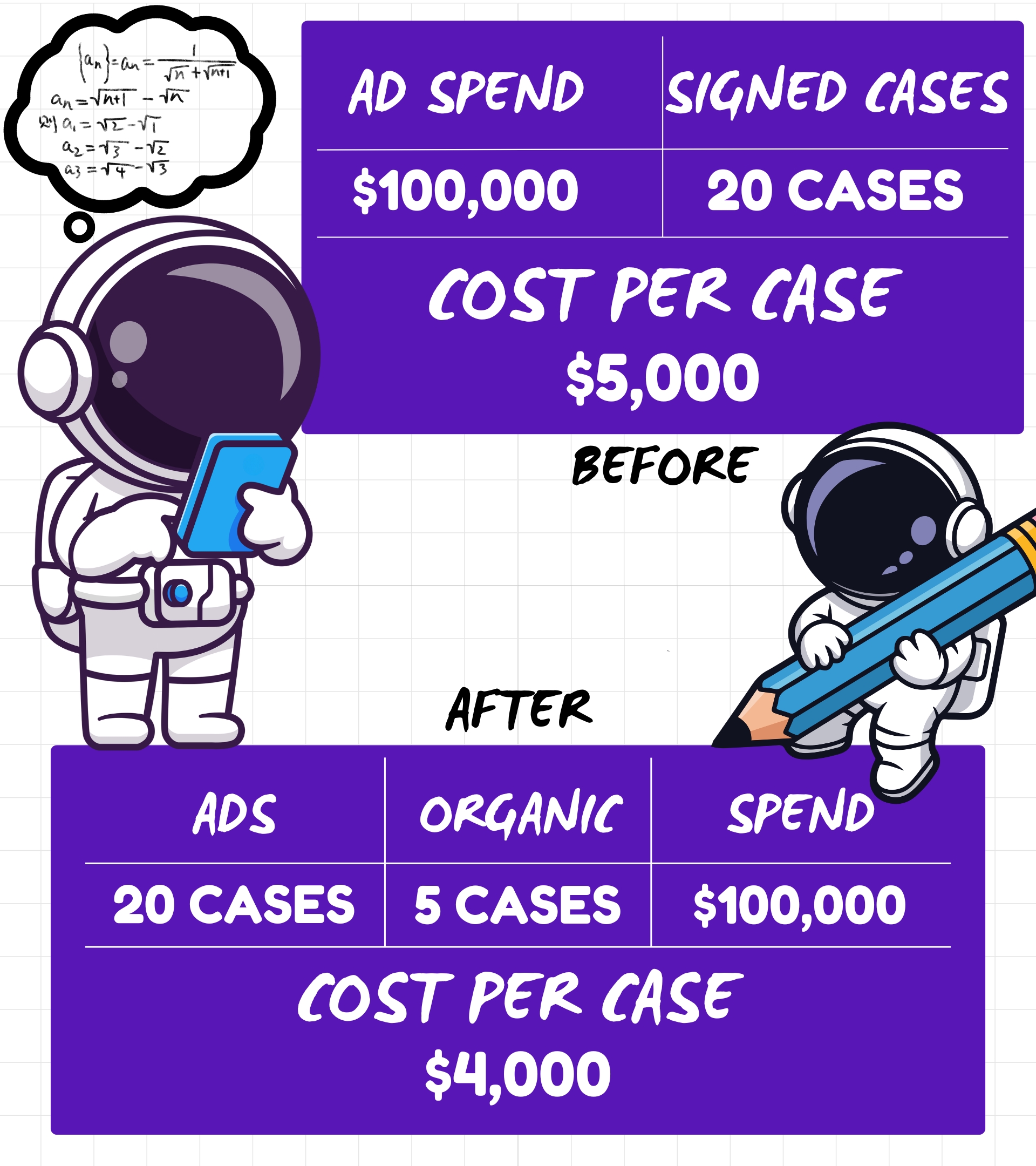
However, if you take the same graph/image above, and you add additional cases into the scenario that you obtain from non-paid ads, your cost per acquisition drops. And it drops dramatically. So… how do you land quality MVA case leads without paying per click or buying signed car accident retainers? Well, that’s what we’re going to discuss below. Here are our 5 effective ways you can generate auto accident leads without maxing out your credit cards.
Number One: AI Placements for Car Accident Leads
AI is a game-changer for businesses looking to reach potential clients and secure leads without heavy investment in paid ads. From automation to intelligent content creation, here’s how you can make the most of AI for car accident leads:
1. AI-Powered Chatbots
AI-powered chatbots like Drift, Tidio, or Intercom can significantly improve customer interactions on your law firm’s website. These bots are available 24/7 to answer common questions, collect contact information from visitors, and guide them toward booking a consultation.
For instance, when someone searches for “what should I do after a car accident in [city]?”, your chatbot can provide immediate, helpful answers while capturing their details for follow-up or direct assistance.
2. AI-Driven Content Personalization
AI tools like HubSpot, Marketo, and ActiveCampaign allow you to segment your marketing efforts to target specific audiences. For example:
- You can create email sequences focusing on safety tips for driving in your area, legal steps after an accident, or what to do when handling insurance adjusters.
- These AI systems can personalize communication for different demographics, like Spanish-speaking individuals or people searching for local attorneys in your metro area.
3. Leveraging LLMs to Create Blog Content (Including Placements on Gronk and GPT)
How do you get placement on modern AI-powered search interfaces like Gronk or GPT? By creating content that’s authoritative, well-structured, and tailored for voice and AI-focused search algorithms.
Use LLMs for Blog Writing Assistance:
AI-based tools like ChatGPT, Jasper AI, or Writesonic can help you draft, refine, or outline long-form blog posts that resonate with your target audience. Enter detailed prompts based on high-traffic keywords related to car accident cases to generate high-quality, optimized content.
Inject Local Relevance:
To land placements on platforms like Gronk and GPT, craft blog posts with location-specific references. These tools prioritize hyper-local and conversational responses.
Focus on User Intent:
AI platforms like GPT analyze user behavior to deliver the best answers. By addressing user-specific pain points (e.g., “Can I afford a personal injury lawyer in [city]?”), your content will naturally rank higher when these questions are asked in conversational searches.
Create FAQs:
Design short, concise, and authoritative FAQs that answer key questions. They have a higher likelihood of being picked up by platforms like GPT because these systems love to serve quick and informative responses.
Update Regularly:
Consistently update your content to match trending or frequently asked questions (FAQs) regarding personal injury laws in your region. AI prioritizes fresh, accurate information when choosing which sites to reference.
4. Using AI to Monitor Content Effectiveness
With tools like Semrush, Ahrefs, and Google Analytics, you can see how often your AI-aided blog content ranks well and measures user behavior (time on page, bounce rates). AI can also guide content updates and engage you with real-time competitive analysis.
By using these AI-driven tools and approaches, you can optimize your blog outputs and increase the chances of being referenced by search engines and AI systems like Gronk and GPT.
Number Two: Organic Content Silos in English and Spanish
Organizing your website’s blog and page content into “content silos” can significantly improve your SEO rankings. This structure not only helps search engines understand your content’s purpose, but it also encourages users to dig deeper into related topics.
1. What Are Content Silos?
A content silo is essentially a grouping of related content or topics under a single, overarching theme. For personal injury practices, examples include:
Auto Accidents:
“What to Do After a Car Accident,” “5 Mistakes to Avoid When Filing a Car Accident Claim,” and “Common Car Accident Injuries Explained.”
Pedestrian Accidents:
Focus on assisting pedestrians and bicyclists with legal recourse post-accidents.
Insurance Issues:
Articles that clarify dealing with insurance companies, from “When Insurance Companies Deny Claims” to “How to Spot Unfair Adjuster Tactics.”
2. The Importance of Bilingual Content
Spanish-speaking individuals represent a large portion of many U.S. communities. If your city has a meaningful Spanish-speaking population, offering bilingual content can separate you from the competition:
- Translate every blog article into Spanish (e.g., “¿Qué hacer después de un accidente automovilístico en Nueva York?”). Google rewards sites that target more diverse audiences, especially in underserved communities.
- Promote this content on platforms where Spanish speakers are active, such as Facebook or WhatsApp groups.
Number Three: Making YouTube Videos in Your Office
Video marketing doesn’t require high production costs to be effective — it just requires an authentic approach. Personal injury lawyers can use video content to answer crucial client queries, explain complex legal theories, or share real testimonials.
Steps to Create Engaging Office Videos:
- Set the Stage: Use your office or a quiet, well-lit space. Props such as branded mugs, bookshelves, or certificates in the background make the video feel more professional.
- Create Scripts: Develop scripts with a conversational tone. Avoid legal jargon and keep topics accessible to the average viewer.
- Ideas for Videos: Answer frequently asked questions, showcase success testimonials, share motivating client stories, or explain legal principles (like contingency fees).
- Engage Viewers: Use visuals such as diagrams or case flowcharts to explain complex concepts. End with a call-to-action: “Call us for a free consultation!”
- Keep It Short: Aim for videos between 2 to 5 minutes. If needed, split long topics into a mini-series to keep audience engagement high.
Pro Tip: Use YouTube SEO techniques, such as adding keywords and creating clear, descriptive video titles like “What To Do After a Car Accident in [City].”
Number Four: Organic Social Media Posts
Social media isn’t just about paid ads; organic posts provide an authentic way to connect with your audience and showcase your expertise.
1. Share Valuable Content
Think about what car accident victims might value today — simple checklists, legal explanations, or even uplifting client testimonials can go a long way. For instance:
- Success Stories: “We helped a car accident victim win $X settlement — here’s how.”
- Preventative Content: Traffic safety tips or “5 Precautions to Avoid a Car Crash.”
2. Platforms to Focus On
- Facebook: Use for community engagement, such as joining local groups to offer advice.
- Instagram and TikTok: Short videos, Reels showing day-to-day office operations, or car accident tips work well here.
- LinkedIn: Share professional content (articles, case studies) to connect with local businesses and attorneys for referrals.
3. Call-to-Action (CTA) Engagement
Don’t forget to include clear CTAs: “Need help after a car accident? Contact us today for a free consultation!” Always keep avenues for direct messaging open so potential clients can reach out easily.
Number Five: Optimizing Your Google Business Profile
Your Google Business Profile (GBP) is your gateway to attracting local traffic. For car accident lawyers, optimizing this resource is non-negotiable.
Steps to Up Your Google Business Game
- Complete Every Field: Fill in all relevant business details, including address, phone number, website, and operational hours.
- Enhance with Photos: Upload high-resolution images of your office, staff, case successes (with permission), and even screenshots of positive reviews.
- Encourage Positive Reviews: Ask satisfied clients to leave detailed reviews, as they can significantly influence prospective clients.
- Leverage the Q&A Section: Preemptively answer common questions users might have — this helps improve your profile’s relevance for AI and human searches alike.
- Post Regularly: Use the “posts” feature for updates or educational outreach. Share links to your newly published blogs, client success stories, or community events.
Why Google Business Matters:
More than 46% of Google searches have a local intent, and customers rely heavily on online reviews when deciding between service providers. Optimizing for GBP is one of the quickest ways to ensure you appear in the map pack and gain visibility in your local area.

Additional Affordable Options to Get More Car Crash Clients
Attracting clients doesn’t always require a massive budget. By focusing on grassroots strategies, you can increase your visibility while building trust in your community. Below are some affordable yet highly impactful tactics:
- Educational Talks with Local Organizations
- Offer free workshops to local businesses, schools, or community centers on topics like “What to do in the event of a car accident.” Share crucial steps to take immediately after an accident, including what to document, how to deal with insurance companies, and when to contact a lawyer.
- Partner with local community organizations or neighborhood associations to host these events.
- Community Newsletters
- Write a regular column or feature for community newsletters, homeowner’s associations, or local business bulletins, discussing car safety issues, legal advice, and tips for dealing with accidents.
- Digital Billboards Targeting High-Traffic Areas
- While traditional print advertising can be expensive, digital advertising on local online platforms or community websites is often more affordable. Promote specific services such as free consultations or highlight past results.
- Offer Pro-Bono Consultations at Events
- Participate in community health fairs or advocacy campaigns and offer free legal consultations for accident-related questions. Bring along branded informational brochures, free giveaways like pens or magnets, and business cards.
- Car Repair Shop Partnerships
- Collaborate with local car repair or body shops by leaving brochures or business cards there. Many people who have been in accidents visit these shops to repair their vehicles and may need legal assistance as a next step.
Banners at Local Schools
Sponsoring banners at local schools is a cost-effective and impactful way to demonstrate your care for the community while increasing exposure to your law firm. Schools often have ample visibility during sporting events, fundraisers, or on campuses that many people frequent.
- Sponsor School Sports Banners
- Offer to sponsor banners along football fields, gymnasiums, or baseball fields. Include your logo, website, and a simple tagline like:
“Accident? Know your options. Call [Law Firm Name] today!”
- Offer to sponsor banners along football fields, gymnasiums, or baseball fields. Include your logo, website, and a simple tagline like:
- Get Involved in School Events
- Sponsor school events such as fairs, graduations, or parent-teacher associations. Local families appreciate businesses that support their educational activities.
- Advertise on Yearbooks or Event Programs
- Schools frequently sell advertising space in yearbooks, drama or choir performance programs, and other print or digital materials. A simple message like, “Proud Supporter of [School Name]—Here to Help When You Need Us! Call [phone number]” can go a long way.
Sponsor Youth Sports Teams in Your Community
Youth sports sponsorships provide excellent branding opportunities while showing your support for local families. You can help sponsor kids’ uniforms, equipment, or events in your community.
- Sponsor Uniforms or Jerseys
- Place your logo on the back or sleeve of a local youth baseball, soccer, or basketball team’s jerseys. Use a tagline like:
“[Law Firm Name]—Strong Defense In Court, Just Like [Team Name] on the Field!”
- Place your logo on the back or sleeve of a local youth baseball, soccer, or basketball team’s jerseys. Use a tagline like:
- Event Sponsorship
- Many youth sports leagues host annual tournaments or fundraising events. Sponsor trophies, awards, or halftime shows and have your law firm name mentioned by the announcer during the event.
- Host a Youth Sports Clinic
- Go further by organizing and hosting free sports clinics, with professional athletes or local coaches volunteering to teach kids. This underscores your firm’s values of mentorship and community.
- Engage Via Social Media
- After supporting a sports team or community league, share photos and updates on your website and social media platforms. You can post recaps of games and celebrate their victories, which further builds community goodwill.
Community Involvement
Community involvement is a key tool in building trust and credibility that can translate into new clients. This strategy is not only affordable, but it also builds a positive reputation for your law firm.
- Host or Sponsor Local Events
- Support charity walks, food drives, or festivals in your community. You could also host safety seminars with local police departments, emphasizing car accident prevention and legal rights related to accidents.
- Volunteer at Local Nonprofits
- Encourage your team to volunteer at community organizations or plan group volunteer days. Partnering with causes such as those aiding accident victims or promoting road safety can give your efforts extra relevance to your practice.
- Build Relationships with Local Media
- Volunteer to write articles or provide legal insights on car accidents or injury law to local newspapers, TV segments, or blogs. By positioning yourself as a local expert, you can generate valuable free publicity.
- Support Local Businesses
- Collaborate with local businesses in your area to build cross-promotional opportunities, and prominently display their fliers in your offices. For example, partner with car services, insurance agents, towing companies, and safety gear stores.
Network With Local Lawyers in Other Areas of Practice
Building a cross-referral system with lawyers who specialize in fields outside injury law is an invaluable marketing strategy.
- Identify Key Collaborators
- Network with local real estate, family, criminal defense, estate planning, and business attorneys. These are often the first people clients reach out to when they need legal advice, and they may have clients who need a car accident lawyer.
- Create a Referral Agreement
- Develop mutual referral agreements with attorneys in these surrounding fields.
- Example: “Whenever I have a client who needs estate planning services, I’ll send them to you. If you find a client who’s been in a car accident, I’d love if you could refer them to us.”
- Some agreements offer referral fees (if legally permitted in your jurisdiction).
- Attend Networking Events
- Join your local bar association, attend their events, and participate in panels or workshops. This can help create relationships with fellow attorneys who can refer clients.
Film Podcasts About Legal Injury-Related Topics
Podcasts are affordable to produce and can establish you as a thought leader in your industry.
- Choose Compelling Topics
- Create an ongoing series where you address important topics about personal injury law. Examples:
- “5 Things to Do After a Car Accident, According to an Attorney”
- “10 Steps to Handle Complex Insurance Company Tactics”
- “What is Comparative Fault, and How Does It Affect Claims?”
- Create an ongoing series where you address important topics about personal injury law. Examples:
- Invite Guests to Add Credibility
- Bring on a variety of experts, including doctors, insurance adjusters, city officials, advocacy leaders, or even former clients willing to share stories about seeking legal help.
- Leverage Local Podcast Networks
- Partner with local podcast producers or small radio networks to distribute your content. Many local burning topics, like road safety campaigns, will fit seamlessly with your expertise.
- Use Video Podcasting
- Pair audio with video to use the podcast on multiple platforms, such as YouTube, TikTok, and Instagram. This multiplies your engagement potential without doubling your workload.
Ask Past Clients for Referrals
Satisfied clients are your best advocates. Referral business is both cost-effective and highly valuable because it builds on trust and word-of-mouth recommendations.
- Inquire at Personal Milestones
- If a client reaches a positive resolution or victory in court, that’s the perfect time to ask:
“Do you know anyone else who might benefit from our help? We’d love it if you shared our information with them.”
- If a client reaches a positive resolution or victory in court, that’s the perfect time to ask:
- Launch a Referral Program or Contest
- Incentivize clients to refer their family and friends by creating a referral program. Examples of possible rewards:
- Discounted rates on future consultations (if applicable).
- Gift cards to popular local businesses.
- Feature them in your newsletter or social media! For instance:
“Big shoutout to Jane Doe for referring her brother to us. We’re always excited to help the people you care about.”
- Incentivize clients to refer their family and friends by creating a referral program. Examples of possible rewards:
- Always Follow Up on Past Cases
- A simple thank-you note, email, or call can go a long way. Check in periodically with past clients to see how they’re doing and remind them that you’re there to help their family and friends if needed.
- Ask for Online Reviews
- Online reviews are a more passive but equally powerful form of a referral. Encourage clients to post testimonials on Google, Yelp, Avvo, or social media.
Quick and Aggressive Ways to Land Auto Accident Injury Leads
In the competitive space of personal injury law, landing auto accident leads quickly requires a calculated approach. From leveraging digital marketing platforms to building a robust client intake system, these strategies aim to deliver maximum exposure, generate high-converting leads, and create a solid return on investment (ROI) for your law firm.
Number One: Google Ads
Google Ads offers unparalleled access to potential clients who are actively searching for legal help. By targeting keywords used by individuals immediately following a car accident, you can position your law firm as a trusted resource during what is often a highly emotional and confusing time.
-
Advanced Keyword Strategies
- Identify long-tail keywords that reflect real-world searches clients make after accidents, such as “lawyer for rear-end accident claim,” “car accident lawyer [city],” or “what to do after a car crash.”
- Prioritize keywords that demonstrate a clear intent to hire a lawyer, and use negative keywords to avoid irrelevant clicks. For example, exclude terms like “job,” “salary,” or “school” to avoid wasting ad spend on people searching for legal careers or education.
-
Geo-Targeting for Hyper-Focused Campaigns
- Hyper-local campaigns ensure your ads reach clients in areas where you’re most likely to secure cases. You can target specific neighborhoods, highways, or even zip codes prone to traffic accidents. Run separate campaigns for different locations with customized ad copy for each region.
-
A/B Testing and Performance Optimization
- Continuously test different ad headlines, descriptions, and display visuals to see which ones perform best. Use analytics to monitor your click-through rate (CTR), conversion rates, and cost-per-acquisition (CPA).
-
Call-Only and Mobile-First Campaigns
- Often, clients searching for help after an accident are using mobile devices. Create call-only ad campaigns to connect them directly to your law firm with one click.
-
Google My Business Integration
- Connect your Google My Business profile to your ads. This will help customers see your location, reviews, hours, and website, adding another layer of trust.
Number Two: Local Service Ads (LSAs)
Local Service Ads are a game-changer for personal injury lawyers because they allow you to connect directly with clients searching for services in your area. These ads appear prominently at the top of Google search results, ahead of traditional search campaigns.
-
Get the “Google Screened” Badge
- To qualify for LSAs, you need to go through Google’s verification process, which involves providing your licensing, professional credentials, and background checks. The Google Screened badge signals credibility and instills confidence in your potential clients.
-
Set Up Profiles That Convert
- Optimize your Local Service Ads profile with the following:
- Client reviews: Highlight positive testimonials that speak to your ability to help others.
- Relevant Credentials: Showcase your law firm’s specialization in auto accident claims.
- Photos and Videos: Include headshots and any media that portrays a professional yet approachable image.
- Optimize your Local Service Ads profile with the following:
-
Pay Only for Verified Leads
- With LSAs, you’re charged per lead rather than per click. This means your advertising dollars are spent only on prospects who actively contact your firm. However, it’s vital that your team responds promptly and professionally to every inquiry to maximize your chances of conversion.
-
Use the LSA App for Quick Responses
- Download the LSA mobile app to respond to calls or messages within seconds. The faster you respond, the higher your chances are of securing the client before they move on to another firm.
Number Three: Meta Ads (Facebook and Instagram Ads)
Social media platforms like Facebook and Instagram offer targeted ads that help you reach people who may need your services but aren’t actively searching. Leveraging these platforms can help you build awareness and generate leads.
-
Create Laser-Focused Campaigns
- Use Meta Ads Manager to define your target audience based on:
- Geography: Focus on cities, zip codes, or even regions with high accident rates.
- Demographics: Age, occupation, and behaviors like frequent car travel or pending life events (e.g., new drivers or parents of teen drivers).
- Interests: Target users interested in cars, insurance, vehicle repair, or legal assistance.
- Use Meta Ads Manager to define your target audience based on:
-
Leverage Lookalike Audiences
- Use Facebook’s Lookalike Audiences feature to target users similar to your past clients or those who’ve interacted with your previous ads, website, or Facebook page.
-
Run Eye-Catching Ad Formats
- Use an array of ad formats like carousels, video testimonials, or informative tips on what to do after an accident. Visuals that resonate emotionally will perform best. For example, use images of injured victims receiving legal help or infographics detailing step-by-step post-accident procedures.
-
Drive Leads with Lead Ads
- Use Facebook’s lead forms, which allow users to submit their information without leaving the app. These seamlessly integrate with your CRM to help your intake team follow up immediately.
-
Leverage Instagram Stories and Reels
- Eye-catching short video ads can yield great results on Instagram by showcasing your expertise. For example:
- Use real-world examples of successful cases (with client consent, of course).
- Provide “quick tips” and include a clear call-to-action for consultations.
- Eye-catching short video ads can yield great results on Instagram by showcasing your expertise. For example:
Number Four: Billboards
Despite the rise of digital marketing, billboards are still a powerful and visible promotional tool, especially for personal injury lawyers. They make an impression on drivers in high-traffic areas, putting your services top of mind for potential leads.
-
Emphasize Simplicity
- A billboard is a quick medium, so your message must be concise. For example, “Injured in an Accident? Call [Phone Number]—Available 24/7” will make the most impact.
-
Strategic Placement
- Position billboards near high-traffic highways or intersections, especially where accidents frequently occur. Research accident-prone areas in your region to optimize placement.
-
Utilize LED or Digital Billboards
- Digital boards allow for rotating messages and the display to be updated quickly. You can showcase different aspects of your services within seconds—such as free consultations, past client testimonials, and key contact information.
-
Seasonal Campaigns
- Adjust your messaging by season. For example:
- Winter: “Stay Safe on the Roads. If You Get Into an Accident, Call Us.”
- Holidays: “Protect What Matters Most. Call for a Free Consultation.”
- Adjust your messaging by season. For example:
Number Five: TV Commercials
Television still has the unique ability to deliver your message to a massive audience and create an emotional connection with potential clients.
-
Professionally Produced Ads
- Create polished commercials that feature clear information, real-life scenarios, and emotional narratives. Use your lead attorney or a relatable figure to explain how your firm helps auto accident victims step by step.
-
Target Local Markets
- Narrow your focus to local stations or regional cable networks. Include prime time slots, local morning shows, or weekend sports coverage for maximum visibility.
-
Emphasize Differentiators
- Highlight unique aspects of your firm that set you apart.
- “Zero fees unless we win”
- “$X million recovered for accident injury victims”
- “Local lawyers who care about [City/Region] families.”
- Highlight unique aspects of your firm that set you apart.
Number Six: Radio and Streaming
Radio and music apps provide instant access to audiences, particularly drivers. Combined with storytelling and memorable messaging, you can capture potential clients effectively.
-
Short, Repeatable Catchphrases
- Use a memorable catchphrase. For example:
- “At [Law Firm Name], we fight for every dollar!”
- “Your accident wasn’t your fault—your lawyer’s a call away. Call [Phone Number].”
- Use a memorable catchphrase. For example:
-
Local Traffic Reports
- Radio stations frequently broadcast traffic updates. Consider sponsoring these reports so your message resonates with drivers.
-
Streaming Platforms
- Advertise on platforms like Spotify and Pandora with engaging commercials targeting behaviors like commuting, gym workouts, and leisure activities.
Number Seven: Intake Teams
Your marketing will only take you so far. Converting leads into paying clients often depends on your ability to respond quickly and professionally. A strong intake team bridges the gap between inquiries and signed clients.
-
24/7 Availability
- Accidents happen at all hours. An around-the-clock intake team (or a live phone/chat answering service) ensures you never miss an opportunity to convert a lead.
-
Empathy in Every Conversation
- Clients who’ve been in an accident are often stressed and scared. Train your team to actively listen, show empathy, and provide reassurance.
-
Detailed Information Gathering
- Train your team to ask the right questions during the intake call. Collect details about the incident, injuries, and insurance situation while assuring the potential client you’ll guide them through the process.
-
Immediate Escalation to Attorneys
- When a lead is promising, ensure a seamless handoff to an attorney who can build a connection and close the case quickly. Speedy communication builds trust and increases conversion rates.
By combining these aggressive marketing strategies with a solid client engagement focus, you’ll not only stand out from the competition but also increase your chances of landing valuable auto accident clients quickly. These methods work best when strategically integrated into your overall marketing plan, leveraging technology and community trust for maximum impact. If you need more help crafting campaigns or fine-tuning strategies, let me know, and we can dive even deeper.
Learn More About Marketing Updates and How They Impact Campaigns for Auto Accident Leads
Marketing strategies never stand still—they evolve alongside changes in technology, consumer behavior, and industry trends. Staying ahead of these changes is crucial for law firms that are aggressively pursuing auto accident injury leads. From advancements in digital advertising algorithms to new social media features and shifts in search engine marketing tools, these updates can significantly impact the outcomes of your campaigns. For instance, Google frequently rolls out changes to how their ad auctions work or adjusts their search ranking criteria, which can directly influence your visibility to potential clients. Likewise, platforms like Facebook and Instagram continually tweak their ad targeting algorithms, opening new opportunities to reach highly segmented audiences.
To stay competitive, it’s vital to remain informed about these updates and adapt your efforts accordingly. This means regularly auditing your campaigns, analyzing performance metrics, and tweaking your strategies to align with the latest industry best practices. Partnering with marketing experts who specialize in generating leads for personal injury lawyers, attending webinars, and following authoritative marketing blogs are all excellent ways to sharpen your strategies. When you invest time and resources into understanding these updates, you not only improve your chances of maintaining a steady flow of leads but also ensure your campaigns remain efficient, impactful, and capable of delivering a high return on investment in an ever-changing landscape.